
13
2025
-
02
Detailed Explanation of IBC Totes/tanks Selection and Usage for Beginners

Question 1: Not sure how to determine if the material is suitable for holding liquids.
Beginner confusion.Cannot understand the chemical resistance table, worried about choosing the wrong material leading to leaks or contamination.
Solution.:
1. Ask the supplier directly:
- "I need to store XX liquid (such as hydrochloric acid, cooking oil), which material (HDPE/steel-plastic) is suitable?"
- Request the IBC tanks supplier to provide a chemical resistance table, focusing on materials marked as "compatible (✔)".
2. Simple testing method:
- Request material samples from the supplier, soak them in the liquid to be stored for 24 hours, and observe for deformation or discoloration.
3. Certifications beginners must check:
- Food/Pharmaceutical industry: Must have FDA or EC1935 certification;
- Hazardous materials transportation: Must have UN certification (usually found on the metal label).
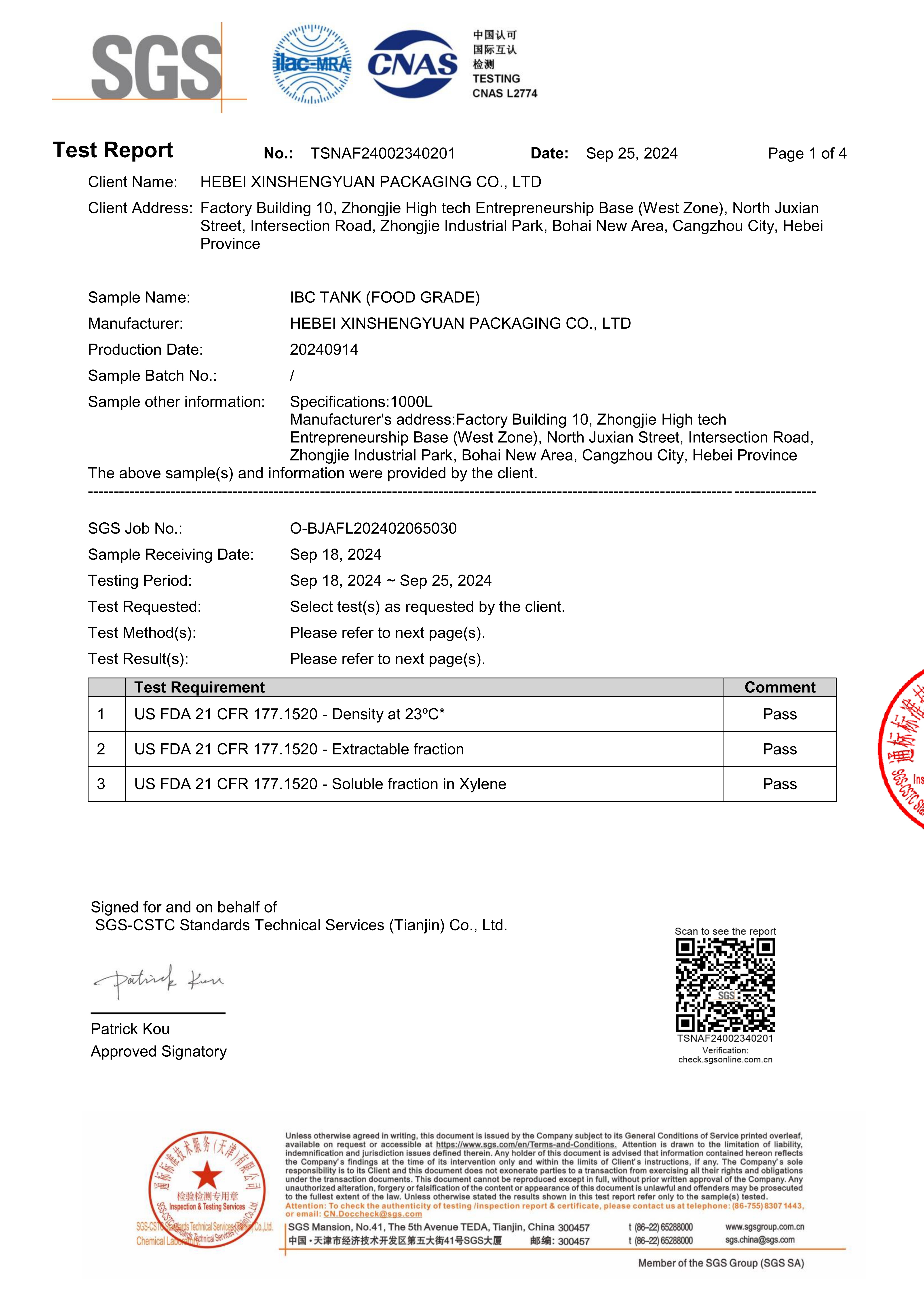
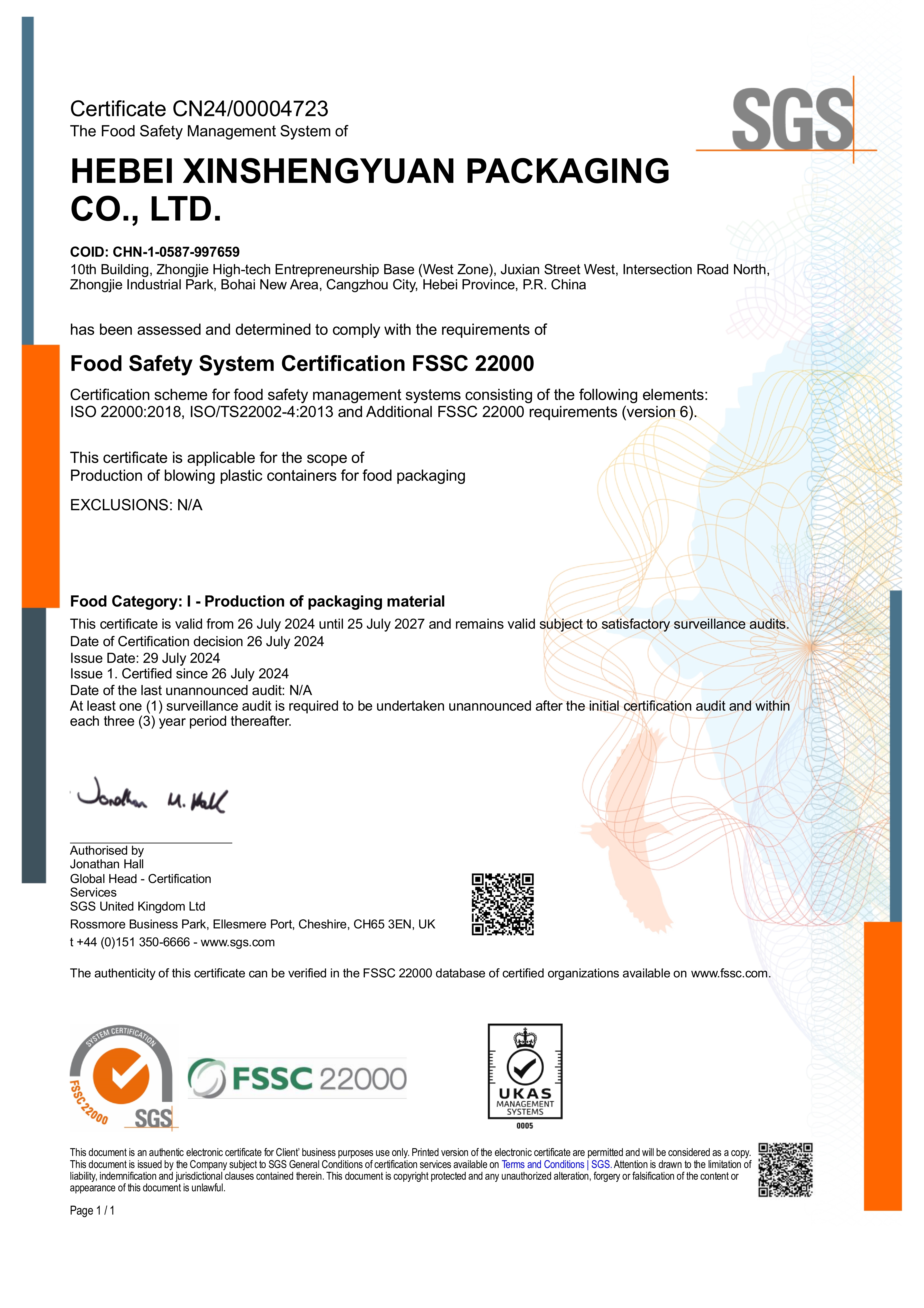
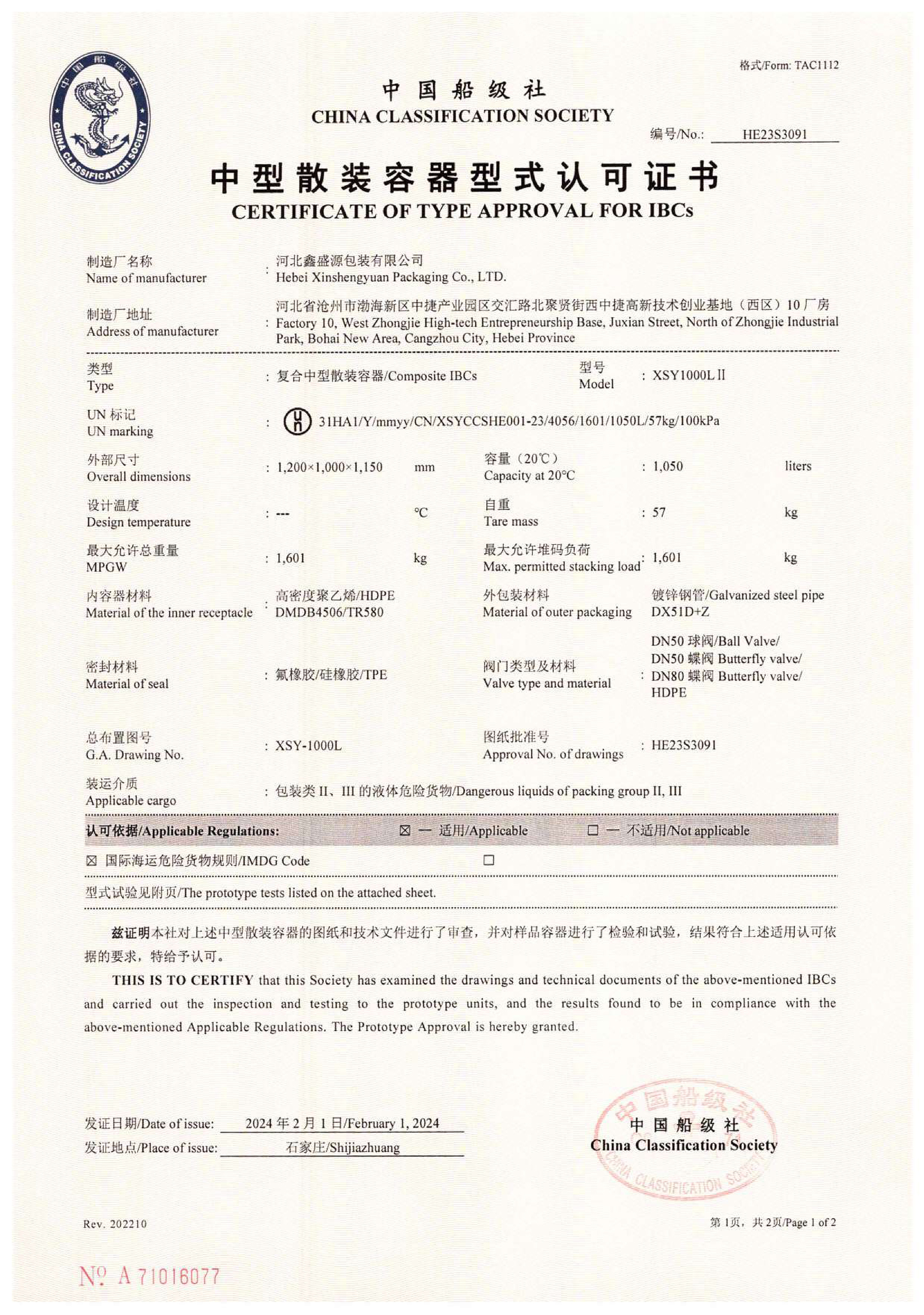
Certificate.
---
Question 2: The IBC tanks frame often deforms or leaks during transportation.
Beginner confusion.Cannot distinguish structural design differences, blindly choosing low-priced IBC tanks.
Solution:
1. Check frame details:
- Choose galvanized steel frames (rust-proof), thickness ≥ 2mm, reject "thin iron sheet" frames;
2. Bottom pallet selection:
- Choose "T-shaped" thick pallets (load capacity ≥ 1.5 tons), reject flat thin bottoms;
- Press down on the pallet with your hand; if there is no obvious deformation, it is qualified.
3. Self-check before transportation:
- Use straps to secure the ton barrel to the truck to avoid shaking;
- Stack ≤ 2 layers (conservative operation for beginners), add anti-slip rubber mats between layers.
---
Question 3: Choosing IBC Tank too large or too small a capacity wastes costs.
Beginner confusion.Inaccurate estimation of actual needs, blindly following standard capacities.
Solution.:
1. Three-step calculation method:
- Step 1 Average daily usage: Count daily usage (e.g., 200L/day);
- Step 2 Transportation frequency: If replenishing once a week, choose 200L×7=1400L → choose a 1000L IBC tanks + additional small barrels;
- Step 3 Space matching: Measure warehouse door/elevator dimensions to ensure the ton barrel can pass (standard size: 1200×1000×1150mm).
2. Recommended plan for beginners:
- For the first purchase, choose a 1000L universal type, and adjust based on usage later;
- For special scenarios (such as laboratories), directly choose a 500L ton barrel with a dispensing port.
---
Question 4: Slow drainage, valve blockage, affecting efficiency.
Beginner confusion.Not understanding valve types, improper operation leading to failure.
Solution.:
1. Valve selection guide:
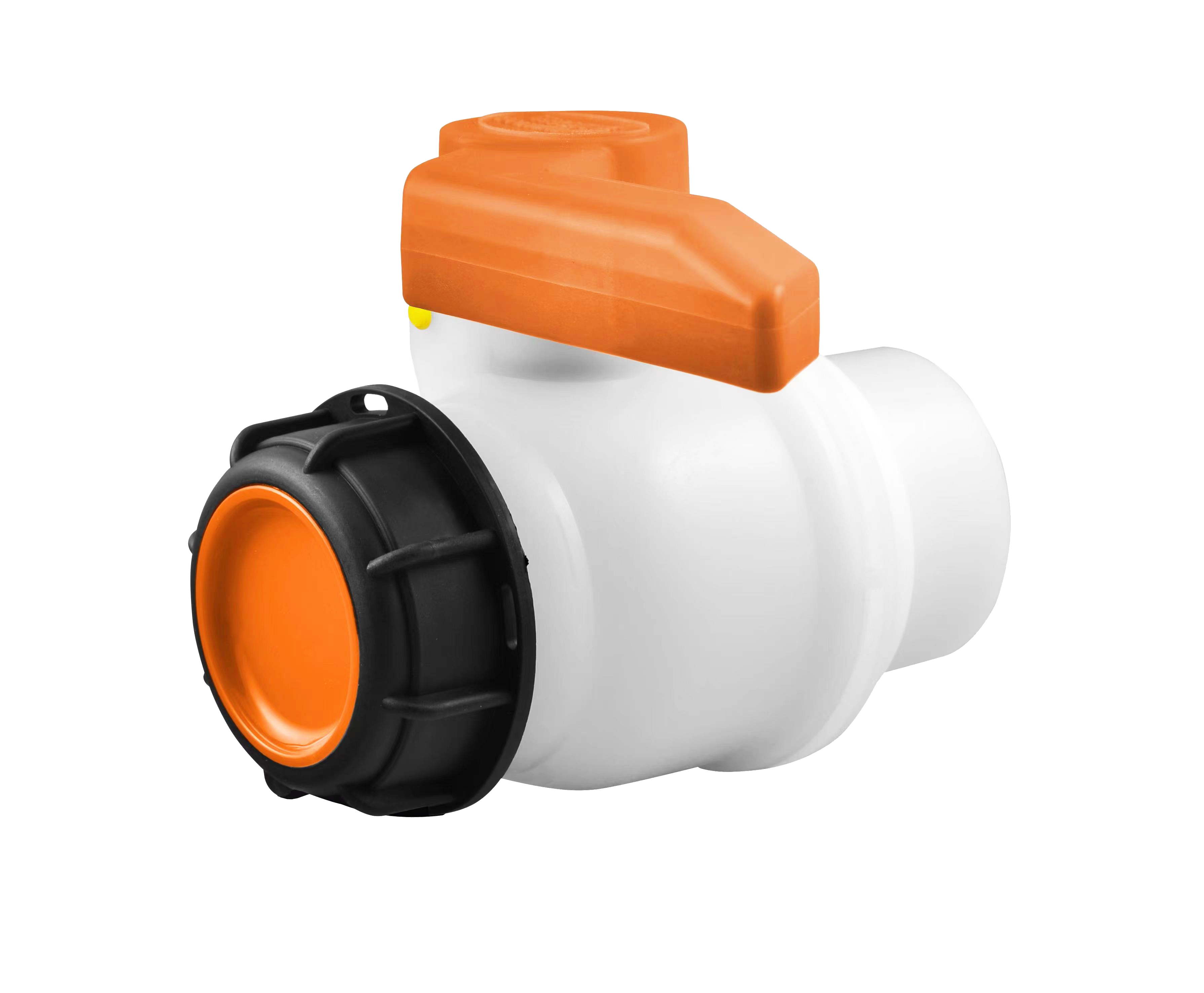
- Ball valve (DN50): Suitable for high-viscosity liquids (such as grease), manual rotation switch;

- Butterfly valve (DN80): Suitable for quick drainage, but requires regular lubrication of the valve core;
- Avoid using "straight-through plastic valves" (prone to blockage).
2. Anti-blocking operation:
- Immediately rinse the valve with clean water after draining, and blow dry with compressed air;
- Disassemble the valve monthly, and clean with a soft brush + neutral detergent.
3. Drainage acceleration techniques:
- Tilt the IBC tanks 10°~15° (place wooden blocks under the bottom) to use gravity to drain residual liquid.
---
Question 5: The IBC tanks incomplete cleaning, residues causing contamination.
Beginner confusion: Not sure how to clean to meet standards.
Solution:
1. Four-step cleaning method (using food-grade IBC tanks as an example):
- Step 1 Pre-rinse: Rinse the inner wall with 40℃ warm water to remove large particle residues;
- Step 2 Chemical cleaning: Dilute food-grade NaOH solution (provided by the supplier) in proportion, and circulate rinse for 20 minutes;
- Step 3 High-temperature disinfection: Introduce steam above 80℃ for 10 minutes;
- Step 4 Drying: Blow dry with clean compressed air or invert to air dry naturally.
2. Inspection standards:
- Wipe the inner wall with white gauze; if there is no color residue or odor, it is qualified.
---
Question 6: IBC tanks body becomes brittle and cracks after outdoor storage.
Beginner confusion.Neglecting UV protection, directly exposing for storage.
Solution.Put it in the warehouse or place it in a location without direct sunlight.
---
Question 7: Deceived by low-quality suppliers, bought unqualified IBC tanks.
Beginner confusion.Not verifying supplier qualifications, easily believing verbal promises.
Solution.:
1. Supplier background check list:
- Must provide: Business license, UN certification, third-party testing report.
- Hydraulic testing in the spot check report (≥100kPa pressure holding for 30 minutes without leakage), drop test (drop from a height of 1.8m without breaking).
2. Contract avoidance clauses:
- Clearly define the responsibility for returns and exchanges in case of quality non-conformance;
- Require a written commitment for "material compatibility guarantee."
---
Question 8: Lack of daily maintenance shortens the lifespan of the IBC tanks.
Beginner confusion.Directly stack after use, ignoring maintenance.
Solution.:
1. Beginner maintenance calendar:
- Daily: Check if the valve is closed after draining to prevent foreign objects from entering;
- Monthly: Check if the frame welds are rusty and if there are any cracks in the barrel (use a flashlight to inspect);
- Annually: Apply anti-rust paint to the steel frame and replace aging seals.
2. Storage specifications:
- Empty liquids, invert or lay on the side to prevent water accumulation;
- Warehouse humidity ≤ 60%, temperature -20℃~40℃.
---
Summary: Quick tips for IBC tanks beginners.
1. Check material certification first: UN/FDA must not be less, soak samples for testing;
2. Structure thickness: Steel frame 2mm + grid base, clearly check the golden frame structure;
3. Calculate capacity usage: Daily average × replenishment cycle, reserve 10% safety margin;
4. Maintenance relies on records: Check monthly, take photos, and address rust and cracks early.
---
Through the above specific steps and tools, beginners can quickly avoid common pitfalls and ensure the safe and efficient use of IBC tanks.
ibc tanks usage,ibc totes usage,ibc tanks selection,ibc totes selection
Next page
CONTACT US
-
Address: No. 5, Torch Avenue, Sino- Europe Industrial Park of Hebei Province, (Zhongjie Huanghua City)
-
Subsidiary Company Address :Workshop 10, Zhongjie Industrial Venture Base, Zhongjie High-Tech Zone, Huanghua, Cangzhou, Hebei Province, China
Tel:400-057-0080
Email:shijiheng@czssjh.com
Tel:0317-5601506
-
Copyright © Hebei Shijiheng Plastics Co.,Ltd.
LINK
-
► About us
► Products
► Partner
► News
► Contact us
PRODUCTS


