
04
2025
-
03
The Ultimate Guide to Solving the Top Ten Common Problems with Plastic Open Top Drums: From Leaks to Deformation
Why is there always leakage when transporting open-top drum? Why do reused plastic drum crack in less than half a year? As a professional in the plastic industry for 15 years, I have witnessed countless clients lose tens of thousands due to neglecting 'small issues'.
This article is based on practical feedback from over 200 factories worldwide, summarizing the 10 major pain points of using plastic open-top drum.——From seal failure, stacking collapse, to label peeling and odor residue, each issue provides foolproof solutions., helping you easily avoid risks and reduce cross-border communication costs.
Whether you are a novice buyer or a seasoned logistics manager, spend 3 minutes mastering these skills to save at least 1 year of trial and error!
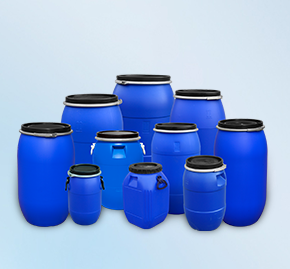
1. Problem: The barrel lid is not sealed tightly, leading to leakage.
Problem cause:
① Insufficient chemical compatibility of the sealing ring:
For example: EPDM sealing rings swell when in contact with mineral oil (volume expansion rate > 15%), while fluororubber (FKM) can withstand it but costs 3 times more.
Industry standard: Refer to the UN certified "Chemical Compatibility Table" (e.g., ISO 1629).
② Exceeding thread processing tolerance:
The thread pitch error of the barrel mouth exceeds 0.3mm (standard requirement ≤ 0.1mm), leading to loose engagement.
Commonly found in low-cost drum using low-precision molds (mold life < 100,000 times).
③ Thermal stress deformation:
The linear expansion coefficient of HDPE is 1.5×10⁻⁴/°C, while that of metal lids is 1.2×10⁻⁵/°C, resulting in a diameter difference of 1.2mm at a temperature difference of 50°C.
Solution:
Replace with a chemically resistant sealing ring.
Ensure the barrel lid is tightened in a diagonal sequence.
2. Problem: The barrel body is deformed or dented.
Problem cause:
① Breaking the critical value of negative pressure vacuum:
The negative pressure strength of HDPE drum is about -0.5bar. If the vapor pressure of the liquid is too high (e.g., gasoline has a vapor pressure > 0.8bar at 40°C), the barrel body collapses after cooling.
② Dynamic load concentration:
When the contact area of the forklift arm is only 50cm², the local pressure = load/area (e.g., 500kg/50cm²=10kg/cm²), exceeding the compressive strength of HDPE (8-12kg/cm²).
③ Poor thermal stability of recycled materials:
drum with >30% recycled material have a heat distortion temperature (HDT) that drops from 75°C for pure HDPE to 60°C, making them prone to softening at high temperatures.
Solution:
Avoid prolonged exposure to environments above 50°C.
Stack no more than 3 layers and add cushioning materials.
3. Problem: Open-top drum crack or become brittle.
Problem cause:
① UV light oxidation chain breakage:
HDPE molecular chains break under ultraviolet light (wavelength 290-400nm), and impact strength drops from 60kJ/m² to <20kJ/m².
② Low-temperature brittleness transition:
The brittleness transition temperature of HDPE is about -70°C, but it rises to -20°C when containing recycled materials, making it prone to cracking in cold regions.
③ Processing defects:
Injection molding temperature <200°C leads to poor melt flow, and residual stress in the barrel wall (stress value > 10MPa).
Solution:
Choose HDPE drum containing UV stabilizers.
Avoid severe impacts before use in cold regions.
4. Problem: Residues inside the barrel are difficult to clean.
Problem cause:
① Surface adsorption polarity difference:
HDPE has low surface energy (31mN/m), and non-polar substances (e.g., grease) are tightly adsorbed through van der Waals forces, requiring polar solvents (e.g., alkaline solutions) to break.
② Micropore retention effect:
HDPE porosity is 0.01%-0.1%, and residues with a molecular weight <500Da (e.g., dyes) penetrate micropores, requiring high-pressure rinsing (>5bar).
③ Chemical crystallization residue:
After being filled with saturated solutions (such as syrup), crystal nuclei form on the barrel wall (with crystal sizes greater than 10μm), which cannot be removed by regular rinsing.
Solution:
Soak in hot water + alkaline cleaner and then rinse.
Use specialized inner lining bags to prevent residues.
5. Problem: The barrel body rolls or shifts during transportation.
Problem cause:
① Design defects in the center of gravity.:
The height-to-diameter ratio of the barrel is unbalanced (e.g., height > 1.5 times the diameter), and the centrifugal force exceeds the friction force at the bottom of the barrel when turning (friction coefficient must be ≥0.4).
②Missing fixing device:
Did not use ISO standard straps (tensile strength ≥2500kg) or anti-slip mats, resulting in downward displacement due to inertial force (formula: F=m×a).
③Incorrect stacking angle:
Did not follow the "pyramid" structure when stacking multiple layers, causing the center of gravity to shift and leading to sliding.
Solution:
Use straps or pallets to secure and fill gaps.
Prefer drum with anti-slip textured bottoms.
6. Problem: Odor in the barrel after long-term storage
Problem cause:
①Micro-permeation effect:
HDPE material porosity > 0.01%, volatile organic compounds (VOCs) are long-term adsorbed on the micro-pores of the barrel wall.
②Biofilm growth:
Residual sugars or fats (e.g., food-grade drum) can promote mold growth when humidity > 60%, releasing sulfur compounds with odor.
③Residual detergent:
Strongly acidic detergents (pH < 3) corrode the plastic surface, forming a rough surface that adsorbs odor molecules.
Solution:
Soak in white vinegar or baking soda solution for 24 hours.
Thoroughly dry and ventilate before storage.
7. Problem: Labels falling off or information unclear
Problem cause:
①Poor weather resistance of label materials:
Ordinary paper labels can delaminate when humidity > 80% or temperature > 40°C due to fiber expansion.
②Incompatibility of adhesive with plastic:
HDPE surface energy is low (about 31 dyn/cm), requiring special acrylic adhesives (bonding strength ≥ 3 N/cm²).
③Solvent contact:
Ketone-based liquids (e.g., acetone) dissolve label inks (solubility parameter > 20 MPa¹/²).
Solution:
Use industrial-grade waterproof stickers or laser-engraved labels.
Clean the barrel surface and apply primer (e.g., alcohol wipe) before sticking.
8. Problem: Thread wear after repeated use
Problem cause:
①Accumulation of fatigue stress:
HDPE thread bending strength is about 25MPa, frequent opening and closing (>50 times) can cause micro-crack propagation.
②Friction between metal and plastic:
Metal cap threads with a roughness of Ra > 1.6μm accelerate plastic wear, and debris can worsen the damage.
③Temperature effects:
At low temperatures (<10°C), HDPE becomes more brittle, and threads are prone to breakage.
Solution:
Regularly apply food-grade lubricating grease to protect threads.
Replace barrel caps after single use (for high-frequency scenarios).
9. Problem: Insufficient load-bearing at the bottom of open drum leading to stacking collapse
Problem cause:
①Insufficient ring stiffness:
The bottom design did not pass the ASTM D2412 test (ring stiffness ≥ 8 kN/m² is qualified).
②Dynamic load impact:
Instantaneous pressure during forklift handling exceeds static load-bearing (e.g., 200L barrel static load-bearing 1 ton, dynamic only 500kg).
③Recycled material contamination:
Adding recycled material > 30% reduces compressive strength (pure HDPE compressive strength ≈ 28MPa, recycled material ≈ 18MPa).
Solution:
Choose drum with "thickened ring bottom" design (enhanced support).
When stacking, place heavier drum at the bottom and lighter drum on top.
10. Problem: Liquid expansion leakage in drum due to large temperature differences
Problem cause:
①Difference in volume expansion coefficients:
The expansion coefficient of liquids (e.g., water) is ≈0.00021/°C, while the expansion coefficient of HDPE drum is ≈0.00015/°C, resulting in a volume difference > 2% at a temperature difference of 30°C.
②Blocked vent holes:
Temporary vent caps with openings < 5mm can easily be blocked by high-viscosity liquids (e.g., grease), causing rupture when internal pressure > 0.1MPa.
③Seal elasticity failure:
At low temperatures, the hardness of EPDM seals increases (from 50 Shore A to 70 Shore A), losing rebound sealing ability.
Solution:
Do not fill more than 90% of the barrel's volume.
Use temporary caps with vent holes in high-temperature environments.
Whether it is leakage, deformation, or cleaning difficulties,open-top drum.Every detail directly affects transportation safety and operational costs. This article dissects the root causes of hidden dangers and provides practical solutions based on real cases and technical parameters in the global supply chain, from materials science to operational specifications. For customized consulting, feel free to contact us privately—let professional experience become your risk firewall!
Learn more about our products:55 GAL Plastic Open-top,55 GAL plastic Drum,160L Plastic Open-top
last page
CONTACT US
-
Address: No. 5, Torch Avenue, Sino- Europe Industrial Park of Hebei Province, (Zhongjie Huanghua City)
-
Subsidiary Company Address :Workshop 10, Zhongjie Industrial Venture Base, Zhongjie High-Tech Zone, Huanghua, Cangzhou, Hebei Province, China
Tel:400-057-0080
Email:shijiheng@czssjh.com
Tel:0317-5601506
-
Copyright © Hebei Shijiheng Plastics Co.,Ltd.
LINK
-
► About us
► Products
► Partner
► News
► Contact us
PRODUCTS


