
12
2026
-
10
IBC Tank Dimensions: A Complete Breakdown of Sizes, Footprints and Facility Compatibility
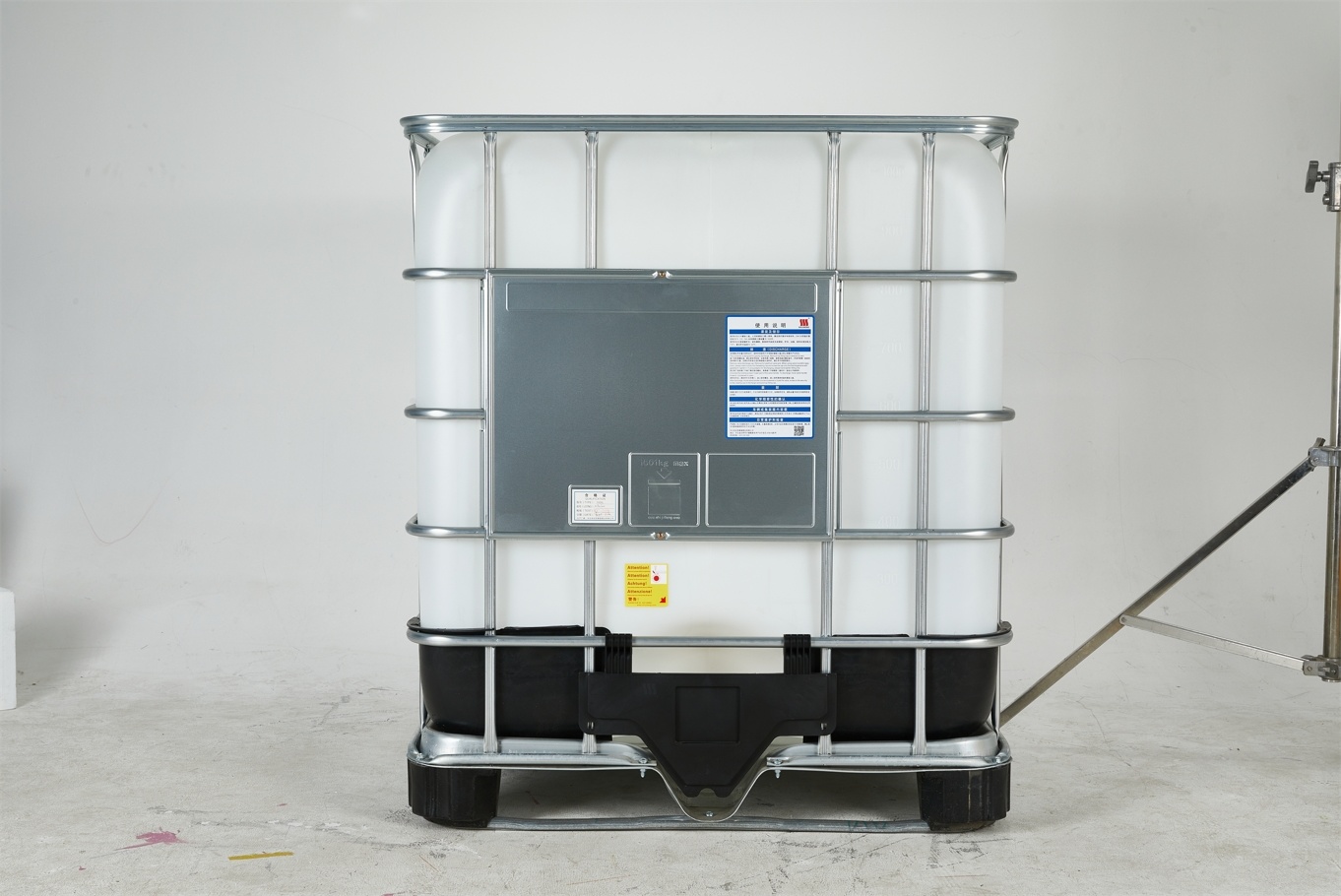
When evaluating intermediate bulk containers for your operation, ibc tank dimensions are just as critical as capacity and material specifications. A tank that holds the right volume but does not fit your warehouse racking, facility doorways, or standard shipping equipment will create costly inefficiencies and require expensive facility modifications. Standardized dimensional design is what makes IBC tanks universally interchangeable across supply chains, and understanding each dimensional category helps you select units that integrate seamlessly with your existing infrastructure. This guide unpacks every key dimensional measurement, standard sizes by capacity, and practical compatibility calculations to eliminate sizing errors.
Why Standardized IBC Tank Dimensions Matter
Unlike custom bulk tanks built for specific facilities, industrial-grade IBC tanks adhere to global ISO and industry dimensional standards. This standardization delivers three core operational benefits:
First, it ensures universal equipment compatibility. Any standard forklift, pallet jack, or racking system will work with a dimensionally compliant IBC tank, regardless of manufacturer. This eliminates the need for specialized handling equipment and reduces upfront capital costs.
Second, it maximizes logistics density. Consistent base footprints and heights allow shippers to calculate exact load counts for trucks, sea containers, and rail cars, minimizing wasted cargo space and reducing per-unit freight costs.
Third, it enables inventory flexibility. Standard dimensions mean you can swap tanks between facilities, reconfigure warehouse layouts, and source tanks from multiple suppliers without operational disruption.
Core Dimensional Categories for IBC Tanks
IBC tank dimensions are not limited to simple length, width, and height. Each measurement serves a specific operational purpose, and overlooking any category can lead to compatibility issues.
1. External Overall Dimensions
External dimensions measure the complete outermost boundaries of the tank, including the steel support cage, top lid protrusions, bottom valve assemblies, and pallet base. This is the measurement you use to calculate door clearance, aisle width, and warehouse floor space requirements. Even small protrusions like valve handles can add 20–50mm to the total length or width, so never rely solely on inner tank sizing for facility fit calculations.
2. Internal Usable Dimensions
Internal dimensions describe the inside cavity of the tank liner, which determines actual usable volume. It is important to note that nominal rated capacity (such as 1000L or 275 gallons) is a safe working volume, not the full fill-to-brim capacity. Most standard IBC tanks have 5–10% additional headspace above the nominal capacity to accommodate thermal expansion and prevent overflow during filling. For reference, a standard 1000L IBC typically has a brimful capacity of roughly 1050 liters.
3. Base Pallet Dimensions
The pallet base footprint is the most critical dimensional specification for logistics and warehousing compatibility. It defines how the tank sits on racking, floors, and transport vehicles. Nearly all global standard IBC tanks use a nominal 1200mm × 1000mm (48” × 40”) base, aligned with both European ISO pallet standards and North American GMA pallet sizes. This universal footprint is the foundation of IBC interchangeability across global supply chains.
4. Forklift Entry Dimensions
Forklift entry specifications define the size, number, and position of fork pockets in the pallet base. Standard IBC tanks feature 4-way entry, meaning forks can be inserted from all four sides for maximum maneuverability. Typical entry clearance height is 90–100mm (3.5–4”), with each fork slot approximately 280mm (11”) wide. These dimensions are calibrated to match standard industrial forklift tine dimensions.
5. Stacking Dimensions
Stacking dimensions specify the total height per unit and the maximum number of units that can be safely stacked vertically. Separate ratings apply for empty and full tanks, and ratings vary by construction material. For standard HDPE composite tanks, empty units can typically be stacked 3–4 units high, while fully loaded tanks are rated for 2-high stacking. Heavy-duty stainless steel models may support 4-high stacking of full loads, depending on manufacturer certification.
6. Port Connection Dimensions
Discharge and fill port dimensions include both the connection size (typically 2” or 3” NPT or flange) and the mounting height of the discharge valve from the floor. This measurement determines whether the tank will connect directly to your existing process piping, pump systems, or filling equipment without custom adapters or platform modifications.
Standard IBC Tank Dimensions by Common Capacity
While minor variations exist between manufacturers, all compliant IBC tanks follow industry-standard dimensional targets. The table below breaks down key measurements for the three most widely used capacities, based on standard HDPE composite models.
表格
| Dimensional Category | 500L (132 Gallon) Compact | 1000L (275 Gallon) Standard | 1250L (330 Gallon) High-Capacity |
|---|---|---|---|
| External Length | 1200mm / 47.2” | 1220mm / 48” nominal | 1220mm / 48” nominal |
| External Width | 1000mm / 39.4” | 1020mm / 40” nominal | 1020mm / 40” nominal |
| External Height | 750mm / 29.5” | 1160–1200mm / 46–47.2” | 1320–1350mm / 52–53.1” |
| Base Footprint | 1200×1000mm / 48×40” nominal | 1220×1020mm / 48×40” nominal | 1220×1020mm / 48×40” nominal |
| Forklift Entry | 4-way, 90mm clearance | 4-way, 100mm clearance | 4-way, 100mm clearance |
| Empty Stack Rating | 4 units high | 3–4 units high | 3 units high |
| Full Stack Rating (HDPE) | 2 units high | 2 units high | 2 units high |
| Standard Discharge Height | ~300mm / 11.8” from floor | ~400mm / 15.7” from floor | ~500mm / 19.7” from floor |
Note that all three capacities share the identical nominal 48×40” (1200×1000mm) base footprint. This design allows warehouses and fleets to handle mixed capacity fleets with the same handling equipment and racking infrastructure.
Stainless steel IBC tanks have slightly thicker wall construction, so internal dimensions are roughly 20–30mm smaller per side than equivalent HDPE models, while external dimensions remain nearly identical to maintain pallet compatibility.
IBC Tank Dimensions & Logistics Compatibility Calculations
Standardized base dimensions make it easy to calculate exact load counts for common transport and storage modes.
ISO Shipping Container Compatibility
A standard 20-foot GP shipping container has internal dimensions of approximately 5898mm long × 2352mm wide. With a 1200×1000mm base, IBC tanks are typically arranged with the 1000mm width aligned across the container width. This allows 2 units side-by-side across the width, and 4–5 units along the length, for a total of 8–10 units per floor layer. If stacking 2-high, a 20-foot container can hold 16–20 units total, depending on tank height and container door clearance. A 40-foot GP container holds roughly 18–20 units per floor layer, or 36–40 units double-stacked.
Over-the-Road Truck Compatibility
A standard 53-foot dry van trailer has an internal width of 96” (2438mm) and length of 636” (16154mm). With a nominal 48×40” base, IBC tanks are loaded 2 units wide and 10 units long, for a total of 20 units per floor layer — the industry standard load for North American LTL and FTL shipments.
Warehouse Racking Compatibility
For selective pallet racking, beam depth should match or exceed the 1000mm (40”) base depth of the tank. Beam level spacing must account for total tank height plus 100–150mm of lifting clearance for forklift placement. For 2-high stacking of standard 1000L tanks, plan for a minimum 2600mm (102”) beam spacing between levels.
Key Dimensional Factors to Evaluate Before Purchase
Beyond basic capacity, verify these dimensional details to ensure a perfect fit with your operation:
- Facility Clearances: Measure all doorways, aisles, and overhead obstructions to confirm the tank’s external dimensions allow safe passage and placement. Pay special attention to low overhead pipes and door frames.
- Discharge Height Alignment: Match the discharge port height to your existing process equipment, drum filling stations, or pump intake heights. If heights do not align, you may need elevated stands or sump pumps.
- Stacking Height Limits: Calculate total stacked height against your warehouse ceiling height and rack load capacity. Remember to include lifting clearance between stacked units.
- Fill Port Position: Verify that the top fill port location aligns with your overhead filling equipment reach and positioning.
- Aisle Width Requirements: For forklift maneuvering, ensure your warehouse aisles are wide enough for 4-way turning with the 1200mm-wide tank footprint.
Common IBC Tank Dimension Misconceptions
Avoid these frequent sizing mistakes that lead to operational issues:
- Misconception 1: Nominal capacity equals total internal volume. Rated capacity is the safe working volume. Total brimful volume is always 5–10% larger to allow for thermal expansion. Never fill a tank above its rated nominal capacity.
- Misconception 2: Tank body size equals external size. Always use full external dimensions including valves, cage corners, and lid caps for clearance calculations.
- Misconception 3: All 1000L IBC tanks have the same height. Height can vary by 50mm or more between manufacturers based on lid design and valve configuration. Always confirm exact height for racking planning.
- Misconception 4: Stack ratings are universal. Stack capacity depends on material, frame design, and load rating. HDPE tanks typically have lower full-stack ratings than stainless steel models. Never assume a tank from one manufacturer matches the stacking performance of another.
Conclusion
Accurate ibc tank dimensions are the foundation of seamless integration with your warehouse, handling equipment, and logistics network. By understanding each dimensional category — from base footprint and forklift entry to stacking height and port positioning — you can select tanks that fit your operation without costly modifications. Always verify full external measurements, not just nominal capacity, and confirm alignment with your specific facility, transport, and process requirements. With standardized dimensions, IBC tanks deliver the flexibility to scale, reconfigure, and optimize your bulk liquid operations over time.
ibc tank pallet base dimensions,ibc tank stacking height dimensions,1000 litre ibc tank internal dimensions,275 gallon ibc tank external measurements,ibc tank discharge port height,ibc tank dimensions
CONTACT US
-
Address: No. 5, Torch Avenue, Sino- Europe Industrial Park of Hebei Province, (Zhongjie Huanghua City)
-
Subsidiary Company Address :Workshop 10, Zhongjie Industrial Venture Base, Zhongjie High-Tech Zone, Huanghua, Cangzhou, Hebei Province, China
Tel:400-057-0080
Email:shijiheng@czssjh.com
Tel:0317-5601506
-
Copyright © Hebei Shijiheng Plastics Co.,Ltd.
LINK
-
► About us
► Products
► Partner
► News
► Contact us
PRODUCTS


