
30
2026
-
10
Food-Grade IBC Totes: The Verification Checklist Most Buyers Skip
A food-grade IBC tote is not a product category—it is a documented chain of evidence. The bottle, the valve, the gasket, the prior-contents history, and the cleaning validation all have to align. When they don’t, the failure rarely shows up as a dramatic tank rupture. It shows up as a swollen gasket, a faint off-note in a juice concentrate, or a rejected shipment at the receiving dock.
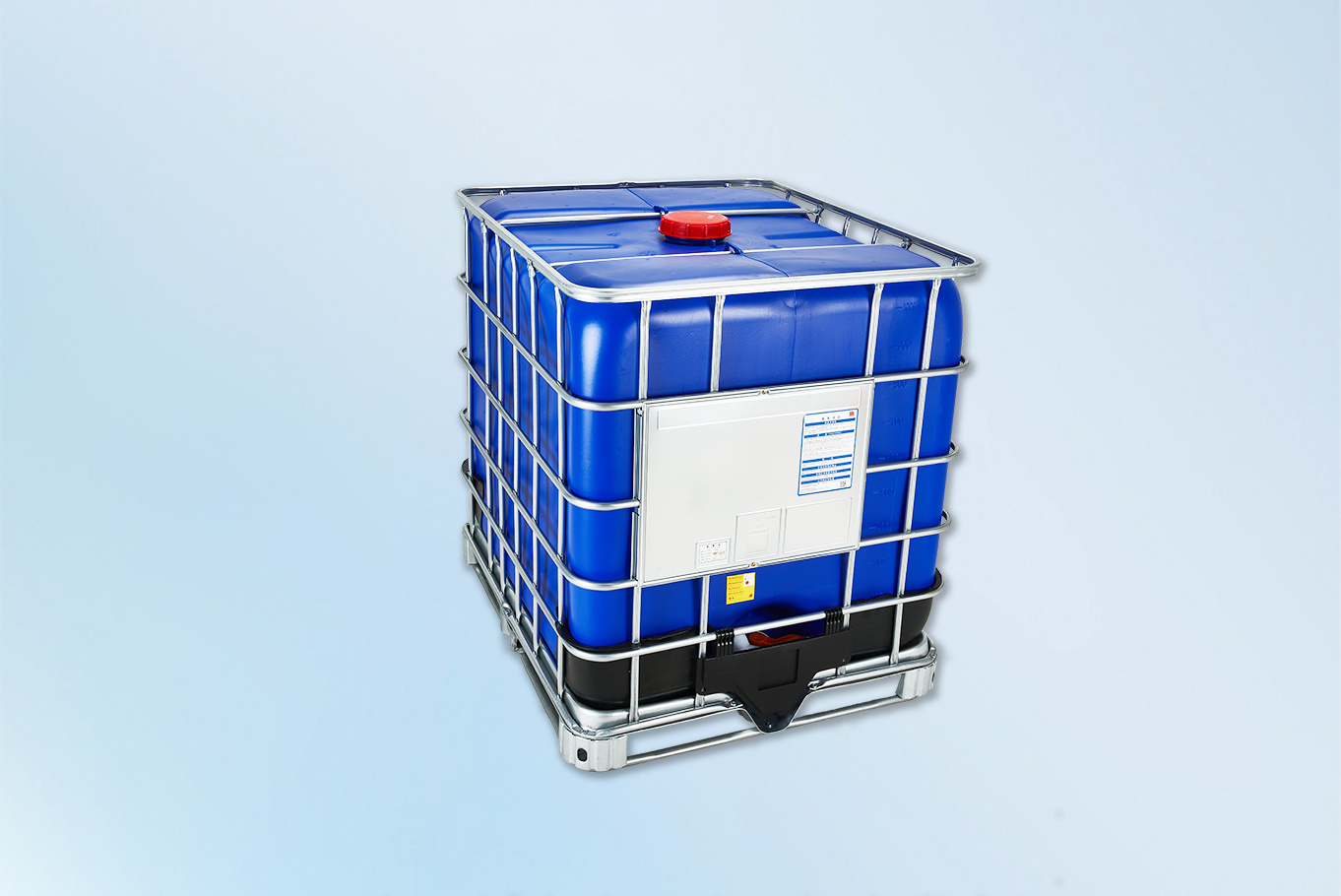
This guide is built around the verification decisions that actually protect food and beverage operations: what “food grade” legally means on an IBC, how to audit a supplier’s documentation, and where the hidden cost of getting it wrong lives.
What “Food Grade” Actually Means on an IBC Tote (It Is Not a Single Stamp)
There is no universal “FDA approved” seal stamped onto an IBC. For HDPE food-grade totes, the legal anchor is the resin’s compliance with FDA 21 CFR 177.1520 for food-contact polyolefins. That is a material-level specification, not a tank-level certification.
In practice, credible food-grade IBCs carry one or more of the following: permanent UN/DOT markings molded into the sidewall, NSF/ANSI 61 approval for potable water contact, and a manufacturer-issued Certificate of Compliance stating that the container materials meet FDA requirements for the intended use. Stainless steel units are generally treated as food-safe at the material level, but the sanitary design of welds, drains, and seals still determines whether the tank is fit for a specific food process.
The practical takeaway: treat “food grade” as a question to ask, not a box to check. A tank that once held a food-safe product but was cleaned with a non-compliant detergent, or fitted with a nitrile gasket instead of a food-grade silicone or EPDM seal, is no longer a food-grade system.
The Three-Layer Audit: Bottle, Valve, and Paper Trail
Most contamination events in food-grade IBC use trace back to a component that was not included in the “food grade” decision. A tank can be perfect and the gasket can be wrong.
Layer 1: The Bottle and Its Prior Life
For virgin HDPE, the resin grade and the absence of recycled content in the food-contact layer are the baseline. For reconditioned or used tanks, prior-contents history is the decisive factor. A used IBC that previously held a non-food chemical should be treated as permanently out of the food lane, regardless of how thoroughly it was washed. Reputable reconditioners provide a Safety Data Sheet or prior-contents declaration showing the tote only ever held food-safe products, plus ATP swab results after cleaning.
Layer 2: The Wet-Side Components
The discharge valve, gasket, and lid seal are where food-grade claims quietly break down. Gaskets must be food-contact-compliant silicone or FDA-compliant EPDM, and they must be compatible with the specific product—high-fat liquids, acidic juices, and dairy products each place different demands on elastomers. A standard nitrile gasket that performs adequately for a water-based syrup may swell or leach in a high-fat oil application. The food-grade decision is a system decision, not a bottle decision.
Layer 3: Cleaning Validation Records
“It looks clean” is not a compliance position. For food-contact refills, the defensible standard is a documented cleaning cycle: pre-rinse, detergent wash at the specified concentration and temperature, final rinse with pH verification (typically 6.5–7.5), and an ATP swab reading below the internal threshold (often cited below 100 RLU, with stricter internal limits for sensitive products). For operations that reuse IBCs across product changeovers, the cleaning log—not the tank itself—is the document an auditor will ask for.
HDPE vs. Stainless: The Cost Question Reframed as a Risk Question
The sticker price gap is substantial. A new 275-gallon HDPE food-grade IBC with a steel cage typically falls in the $350–$500 range, while stainless steel units start at $1,200+** and climb to **$3,000–$8,000 depending on grade (304 vs. 316L). On a pure capital-cost basis, HDPE wins almost every time for non-sensitive bulk liquids.
But the relevant comparison for food and beverage operations is total cost per compliant gallon moved, not purchase price per unit. HDPE is lighter, stackable, and cheaper per gallon than drums by a significant margin—IBC totes typically price 15–20% lower per gallon than drum equivalents, and total-cost-of-ownership comparisons for volumes above 200 gallons show IBCs running 40–55% below drums when handling labor and packaging waste are included.
Stainless earns its premium in two specific scenarios: thermal sanitization cycles (steam or hot-water sanitization that would degrade HDPE) and products with aggressive permeability profiles (certain essential oils, high-terpene flavor concentrates). For a dairy or juice operation running validated CIP with thermal verification, the stainless surface is not a luxury—it is what makes the cleaning cycle repeatable. For a syrup or edible-oil operation without thermal sanitization demands, a food-grade HDPE system with documented gaskets and a validated wash protocol is usually the lower-risk total-cost choice.
The Mistakes That Do Not Show Up on the Purchase Order
Three recurring errors account for a disproportionate share of food-grade IBC failures.
The recycled-content trap. Standard recycled HDPE IBCs are not food grade and should not be used for consumable products, even when the bottle looks identical to a virgin-resin unit. The distinction lives in the resin certification, not the appearance.
The gasket mismatch. A two-dollar gasket that is not rated for high-fat content can compromise an entire tote of edible oil. This is described by operators as the most common and most avoidable food-grade failure mode.
The undocumented clean. Reusing an IBC between products without a validated cleaning record creates carryover risk that is invisible until a sensory or microbial issue surfaces. For food applications, the cleaning process must be treated as part of the tank’s qualification, not an afterthought.
The Practical Verdict
A food-grade IBC tote is the right choice when an operation needs bulk capacity with forklift-level handling and a documented compliance chain. It is the wrong choice when the buying decision stops at the bottle and ignores the gasket, the prior-contents file, and the wash record.
The cheapest compliant system is rarely the lowest-priced tank. It is the tank whose paperwork, wet-side components, and cleaning validation survive an audit without a scramble. Buy the evidence, not the label.
ibc tote for food,food grade IBC tote,food-grade IBC tote specifications,IBC tote for food storage, food contact IBC tote,275 gallon food grade IBC tote
CONTACT US
-
Address: No. 5, Torch Avenue, Sino- Europe Industrial Park of Hebei Province, (Zhongjie Huanghua City)
-
Subsidiary Company Address :Workshop 10, Zhongjie Industrial Venture Base, Zhongjie High-Tech Zone, Huanghua, Cangzhou, Hebei Province, China
Tel:400-057-0080
Email:shijiheng@czssjh.com
Tel:0317-5601506
-
Copyright © Hebei Shijiheng Plastics Co.,Ltd.
LINK
-
► About us
► Products
► Partner
► News
► Contact us
PRODUCTS


