
23
2026
-
09
The Definitive Guide to 1000L IBC Tanks: Specs, Comparisons and Selection
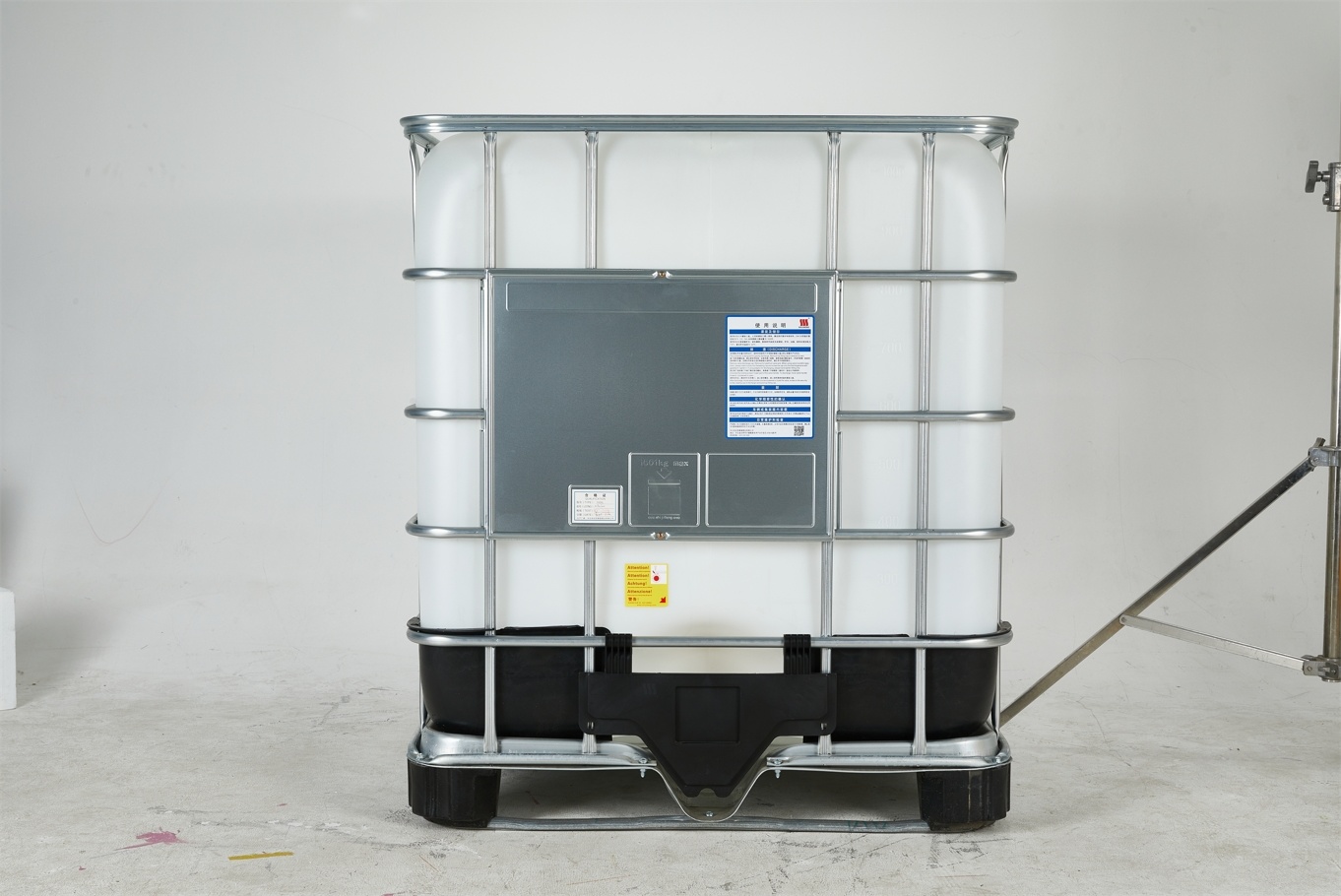
Widely recognized as the global standard for intermediate bulk storage, the 1000L IBC tank strikes an unmatched balance between volume capacity, logistics compatibility, and operational practicality. Also referred to as a 1-cubic-meter IBC, this size has become the default unit across manufacturing, chemical, food, and logistics sectors because it aligns perfectly with standard pallet dimensions, shipping container capacities, and common industrial batch sizes. This guide breaks down the exact specifications, comparative advantages, and selection criteria for 1000L IBC tanks to help you make an informed purchasing decision.
Why the 1000L IBC Tank Is the Global Industry Standard
Unlike niche larger or smaller capacities, the 1000L IBC tank was engineered to fit seamlessly into existing global supply chain infrastructure, making it the most versatile and widely adopted size on the market.
Its dominant position stems from three core design alignments:
- Perfect pallet compatibility: The standard 1200mm × 1000mm base footprint matches European and international standard pallet dimensions, ensuring full compatibility with forklifts, pallet jacks, and warehouse racking systems worldwide.
- Optimized shipping efficiency: A standard 20-foot ISO shipping container can hold 10 units of 1000L IBC tanks floor-loaded, delivering higher volume utilization per container than 500L units and better stability than taller 1250L models.
- Balanced operating weight: With a total loaded weight of roughly 1,050–1,150kg for water-based liquids, 1000L IBC tanks can be moved by standard warehouse forklifts without special heavy-lift equipment, reducing handling costs and operational barriers.
Exact 1000L IBC Tank Specifications & Dimensions
Standard 1000L IBC tanks follow ISO 21871 dimensional norms to ensure universal interchangeability. While minor variations exist between manufacturers, the core specifications remain consistent across the industry.
表格
| Specification | Standard Value (HDPE composite model) |
|---|---|
| Nominal capacity | 1000 litres (275 US gallons) |
| External length | 1200 mm |
| External width | 1000 mm |
| External height | 1150–1200 mm |
| Tare weight (empty) | 55–65 kg (HDPE liner + galvanized steel frame) |
| Max gross weight | 1200 kg |
| Forklift access | 4-way entry, 100mm clearance height |
| Standard outlet | 2-inch (DN50) ball valve |
| Stacking capacity (empty) | 3–4 units high |
| Stacking capacity (full) | 2 units high (certified models) |
Stainless steel 1000L IBC tanks have slightly higher tare weights (80–120kg) and thicker wall construction, but retain the same base footprint to preserve logistics compatibility.
Common Material Types for 1000L IBC Tanks
1000L IBC tanks are available in three primary material configurations, each engineered for specific content types and operating environments.
HDPE Composite 1000L IBC Tanks
The most common configuration features a seamless high-density polyethylene inner liner supported by a galvanized steel outer cage and pallet base. This design delivers excellent corrosion resistance at a low cost, making it ideal for non-corrosive chemicals, water-based liquids, agricultural inputs, and general bulk storage. Food-grade HDPE 1000L IBC tanks meet FDA and EU food contact standards for edible oils, syrups, and beverage concentrates.
Stainless Steel 1000L IBC Tanks
Built from 304 or 316L stainless steel, all-metal 1000L IBC tanks are designed for corrosive chemicals, high-temperature liquids, and sterile pharmaceutical applications. The 1000L size is particularly popular in this material class because it is small enough to be fully sterilized in place and maneuvered through cleanroom doorways, while still offering meaningful batch volume.
Conductive (Anti-Static) 1000L IBC Tanks
For flammable liquids and explosive atmosphere environments, conductive 1000L IBC tanks feature carbon-loaded HDPE liners and grounded steel frames to dissipate static electricity. These units are ATEX-compliant and required for storing solvents, fuels, and volatile chemical intermediates.
1000L IBC Tank vs. Alternative Capacities
Choosing the right IBC size depends on your batch volumes, space constraints, and logistics setup. Here is how the 1000L model compares to other common capacities:
- vs. 500L IBC tanks: The 500L model shares the same 1200×1000mm base but offers only half the volume. This means 1000L tanks deliver twice the storage per square foot of floor space, with lower per-litre packaging costs. 500L units are only preferred for very small batch production or low-volume specialty products.
- vs. 1250L IBC tanks: The 1250L variant uses the same base footprint but adds 25% more volume by increasing height. However, the taller profile raises the center of gravity, reducing stacking stability and requiring higher forklift mast clearance. For general warehouse use and multi-tier racking, the 1000L size offers better safety and versatility.
- vs. 200L steel drums: One 1000L IBC tank replaces five standard 200L drums while occupying approximately 30% less floor space. It also reduces handling time by up to 80% and eliminates four additional seal points, lowering the risk of leaks and contamination.
Targeted Industries & Use Cases for 1000L IBC Tanks
The 1000L capacity aligns with common industrial batch sizes, making it the workhorse of many sectors:
- Fine & Specialty Chemicals: Most small-batch chemical production runs fall in the 800–1200 litre range, making 1000L IBC tanks the perfect unit for manufacturing, storage, and delivery of reagents, surfactants, and specialty formulations.
- Food & Beverage Processing: Food-grade 1000L IBC tanks are the standard for transporting liquid sugar, flavor concentrates, edible oils, and fruit purees between suppliers and production facilities, matching the typical feed volume of industrial mixing tanks.
- Agricultural Inputs: Liquid fertilizers, biopesticides, and animal health supplements are commonly packaged in 1000L IBC tanks, as the size is practical for medium-sized farms and compatible with standard farm equipment for on-site dispensing.
- Construction Chemicals: Concrete admixtures, waterproofing compounds, and curing agents are widely supplied in 1000L IBC tanks, which are rugged enough for job site conditions and easy to transport between locations.
- Pharmaceutical Manufacturing: 1000L stainless steel IBC tanks are used for storing bulk drug solutions, buffer solutions, and sterile water for injection, as their size fits within cleanroom material flow systems.
Must-Have Certifications for 1000L IBC Tanks
Always verify relevant certifications before purchasing, as requirements vary by application:
- UN 31H/Y certification: Mandatory for shipping hazardous materials. Certified 1000L IBC tanks pass standardized drop, stack, and pressure tests to ensure safety during transport.
- FDA/EC 1935/2004 compliance: Required for 1000L IBC tanks used with food, beverage, or pharmaceutical products to confirm no harmful substances leach into contents.
- ISO 9001 manufacturing certification: Ensures consistent production quality and traceability for industrial-grade units.
- ATEX directive compliance: Required for conductive 1000L IBC tanks used in potentially explosive atmospheres.
Expert Buying & Operation Tips
Follow these guidelines to maximize value and safety with your 1000L IBC tank:
- Stick to standard dimensions: Non-standard 1000L IBC tanks may have unusual base sizes that do not fit your existing pallets or racking. Always confirm 1200×1000mm base dimensions first.
- Match material to content compatibility: Even within 1000L tanks, liner resin grades vary. Confirm chemical resistance data for your specific liquid rather than assuming all HDPE tanks are interchangeable.
- Observe stacking limits: Full 1000L IBC tanks should never be stacked more than 2 high unless the unit is explicitly certified for higher loads. Over-stacking is a leading cause of structural failure and spills.
- Consider total cost of ownership: While new 1000L IBC tanks have a higher upfront cost than used units, food-grade and hazardous material applications always require new or professionally reconditioned certified tanks.
- Leverage standard parts: The 1000L size has the widest availability of replacement valves, gaskets, lids, and accessories, keeping maintenance costs low over the product lifecycle.
Conclusion
The 1000L IBC tank earns its status as the industry standard by delivering optimal balance of volume, compatibility, and cost across nearly every bulk liquid application. Its universal footprint ensures it will work with your existing handling equipment and logistics chain, while the wide range of material and certification options means there is a 1000L IBC tank configured for every storage and transport need. By aligning capacity with your typical batch size and verifying appropriate material and certification standards, you can rely on 1000L IBC tanks to streamline operations and reduce long-term packaging costs.
1000l ibc tank,1000 litre ibc tank dimensions,1000l ibc tank weight,food grade 1000l ibc tank,1000l ibc tank stacking capacity,1000l ibc tank for chemical use
CONTACT US
-
Address: No. 5, Torch Avenue, Sino- Europe Industrial Park of Hebei Province, (Zhongjie Huanghua City)
-
Subsidiary Company Address :Workshop 10, Zhongjie Industrial Venture Base, Zhongjie High-Tech Zone, Huanghua, Cangzhou, Hebei Province, China
Tel:400-057-0080
Email:shijiheng@czssjh.com
Tel:0317-5601506
-
Copyright © Hebei Shijiheng Plastics Co.,Ltd.
LINK
-
► About us
► Products
► Partner
► News
► Contact us
PRODUCTS


