
02
2026
-
11
Potable Water in an IBC Tote: Why “Food Grade” Is Not the Same as “Drinking Water Safe”
Potable Water in an IBC Tote: Why “Food Grade” Is Not the Same as “Drinking Water Safe”
The most common mistake in ibc tote for water storage decisions is treating “food grade” as a transferable credential. It is not. A tote built from FDA-compliant resin can be perfectly suitable for syrup or edible oil and still be the wrong vessel for drinking water—not because the plastic is defective, but because drinking water introduces a different risk profile: long residence times, microbial growth, and a near-zero tolerance for residual contamination.
This guide is organized around the three controls that actually determine potable water safety in an IBC tote. They are separate decisions, and skipping any one of them is how a compliant container becomes a compromised water source.
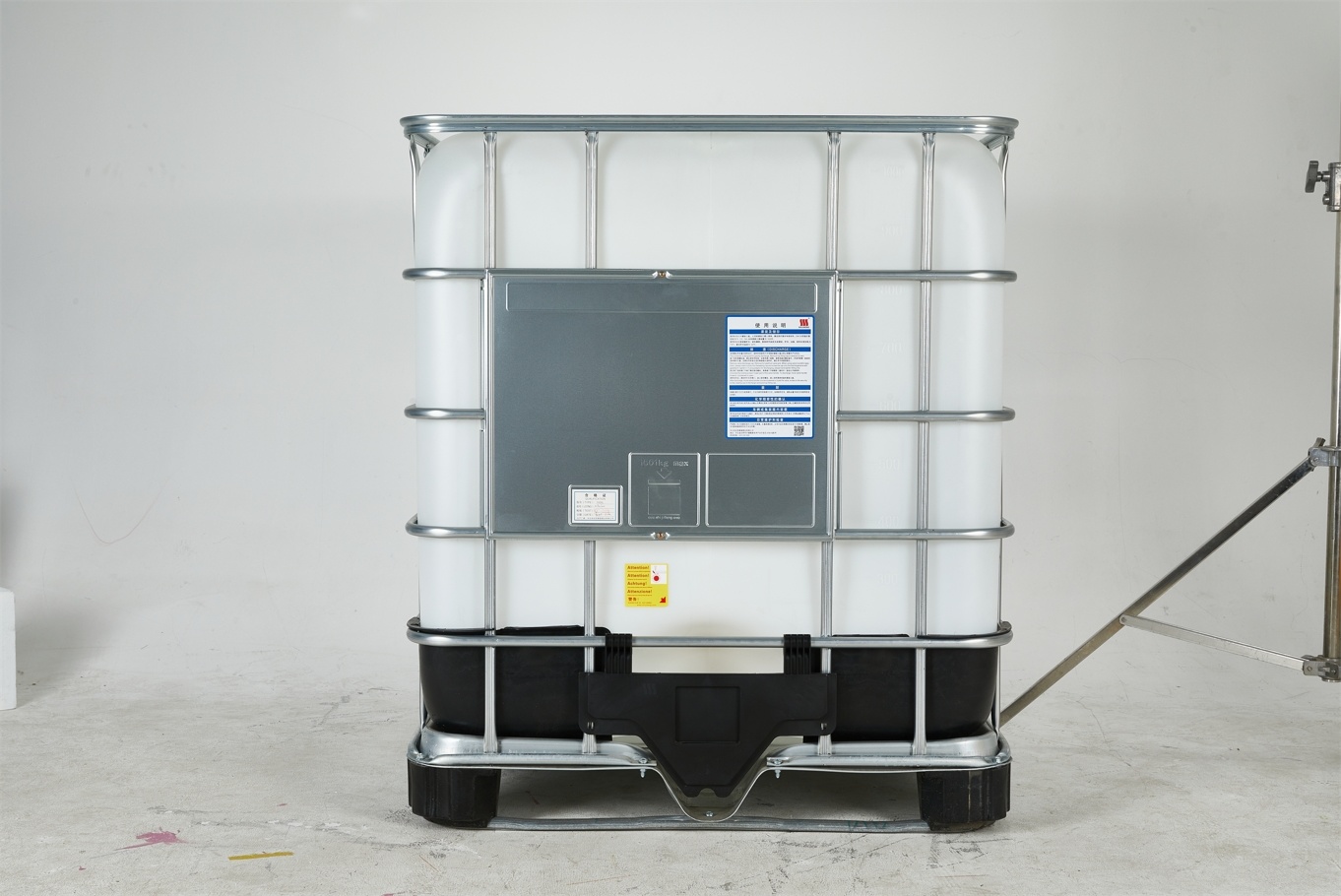
Control 1: The Standard Is NSF/ANSI 61, Not “Food Grade”
Food-contact compliance for HDPE is anchored in FDA 21 CFR 177.1520, which addresses the resin’s suitability for contact with food. Potable water adds a second layer: NSF/ANSI 61, the health-effects standard for water-system components. The two are related but not interchangeable. A tote can be made from FDA-compliant resin and still lack NSF/ANSI 61 certification for the wetted components—valve, gasket, and discharge assembly included.
For a new water-specific tote, require NSF/ANSI 61 documentation on the bottle and the wetted fittings, not a general “food grade” statement. The gap between the two is where procurement shortcuts live.
Control 2: HDPE Has a Memory—Prior Contents Cannot Be Washed Out
HDPE is not chemically inert in the way stainless steel is. It is porous at the molecular scale and can absorb trace residues from previous contents into the polymer matrix itself. This is the decisive limitation of reconditioned and used totes for potable water.
A tote that previously held an industrial chemical, a pesticide, a solvent, or an unknown product cannot be qualified for drinking water, regardless of how many rinse cycles it has undergone. Surface cleaning does not reach absorbed contamination inside the wall. The only defensible rule is this: potable water service requires a new or rebottled water-specific tote with documented virgin-resin provenance, or a used tote with an intact, readable specification plate confirming only food-safe prior contents. “It looks clean” is not provenance.
Control 3: Light Exclusion Is a Water-Safety Control, Not an Aesthetic Choice
A clear or translucent IBC bottle in direct sunlight is a controlled experiment in algae and biofilm growth. Sunlight passes through the HDPE wall, raises the stored water temperature, and feeds any organic material present—algae first, then the biofilm that shelters bacteria. An opaque or black bottle helps, but the cage and the flat top still collect heat and debris.
The practical specification is opaque bottle plus a physical UV-blocking cover. Purpose-made IBC covers are widely available precisely because bottle opacity alone is not sufficient in outdoor installations. For water storage, the cover is not an accessory—it is the difference between a stable water reserve and a warm, illuminated growth chamber. Site the tote in shade where possible, and treat cover integrity as a maintenance item.
The Maintenance Layer: Rotation and Wet-Side Replacement
Even a correctly specified tote needs a maintenance envelope. For sealed potable water storage, a rotation interval of every 2–5 years is a common benchmark, with chlorine residual refresh at the same interval. Open or frequently drawn-down systems need far shorter intervals—weekly to monthly inspection—because every dispensing event admits air and potential ingress.
The wet-side components deserve separate attention. Valves and gaskets are described as frequent failure points that introduce contamination or leaks, and EPDM is the practical default for water-based service. Specify food-grade EPDM for the valve seat and lid gasket, and replace on a time or cycle basis rather than waiting for a visible failure. The bottle can last a decade; the seal that touches the water should not.
The Decision That Precedes the Purchase
The honest comparison is not “IBC tote versus purpose-built water tank” on sticker price. It is “which vessel can I keep potable for its entire service life” . IBC totes deliver unmatched cost per gallon and handling convenience—a 275-gallon unit provides roughly a week of comfortable supply for a two-person household, and used food-grade units can be the most cost-effective high-volume storage available. But that economics only holds if the tote is new or water-specific, opaque and covered, and maintained on a documented schedule.
If any of those three controls is missing, the cheap gallon becomes the expensive one. Buy the provenance, the certification, and the cover together—or do not call it drinking water storage.
ibc tote for water storage,potable water ibc tote,drinking water storage tote,275 gallon ibc tote water storage,ibc water storage tank,water storage ibc tote
last page
last page
CONTACT US
-
Address: No. 5, Torch Avenue, Sino- Europe Industrial Park of Hebei Province, (Zhongjie Huanghua City)
-
Subsidiary Company Address :Workshop 10, Zhongjie Industrial Venture Base, Zhongjie High-Tech Zone, Huanghua, Cangzhou, Hebei Province, China
Tel:400-057-0080
Email:shijiheng@czssjh.com
Tel:0317-5601506
-
Copyright © Hebei Shijiheng Plastics Co.,Ltd.
LINK
-
► About us
► Products
► Partner
► News
► Contact us
PRODUCTS


