
09
2026
-
11
Your Farm’s IBC Totes Are Probably Cross-Contaminated—Here’s How to Prove They Aren’t
Your Farm’s IBC Totes Are Probably Cross-Contaminated—Here’s How to Prove They Aren’t
The most expensive ibc tote for agriculture decision is not the one made at purchase. It is the one made at the fill port: the moment a tote that held a herbicide gets refilled with a liquid fertilizer, or a fungicide tote is “rinsed out” and pressed into service for a micronutrient blend.
Agriculture does not have a single “food-grade” or “potable water” standard that settles the question. It has a segmentation problem. Herbicides, insecticides, fungicides, liquid fertilizers, adjuvants, and seed treatments each carry different compatibility profiles, different regulatory obligations, and different consequences when they meet inside a shared container. A tote that is chemically perfect for one family can be a contamination vector for another.
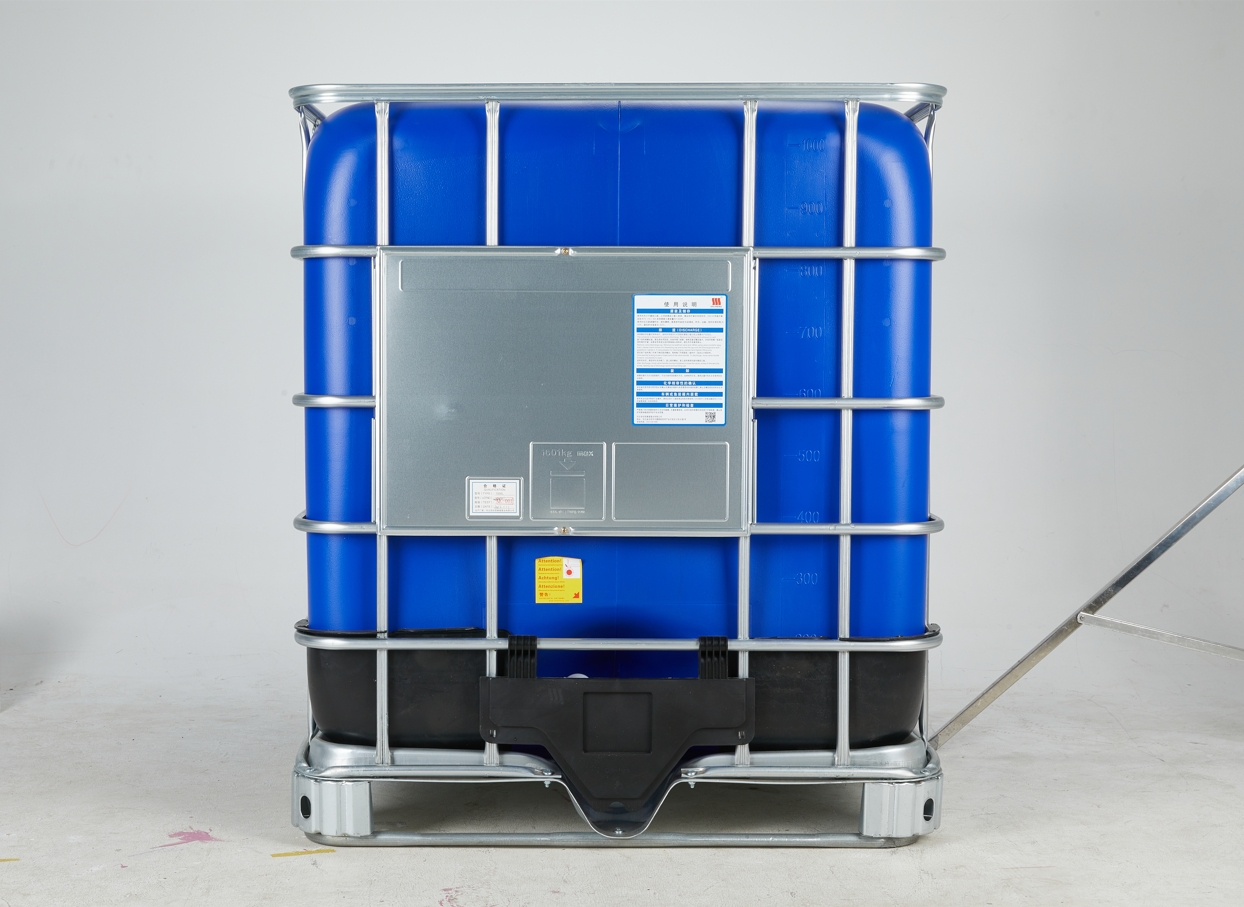
This is not a cleaning problem. It is a dedication problem. The farms that get it right do not rely on triple-rinsing to convert a herbicide tote into a fertilizer tote. They write the dedication rule first and buy the totes to match it.
The Rule That Overrides All Others: Herbicide Totes Never Become Non-Herbicide Totes
The agricultural consensus is unusually clear on this point. Containers used for herbicides must not be used for non-herbicides, and a non-herbicide area, once it has been in contact with a herbicide, should not be permitted to receive non-herbicide product. The recommendation extends across chemical families: designate specific IBCs for specific chemical families—herbicides separate from insecticides, separate from fungicides—to prevent cross-contamination.
The reason is not fastidiousness. It is the asymmetry of consequence. Herbicide carryover can injure or kill a crop at trace concentrations that would be undetectable in a rinse-water test. A tote that held 2,4-D or dicamba and is later used for a foliar nutrient can deliver a dose to a sensitive crop that no cleaning log will predict, because the active ingredient has already absorbed into the HDPE wall. Insecticides and fungicides carry their own carryover risks, but herbicide residue is the one that turns a tank decision into a crop-loss event.
The practical rule for a farm buying ibc tote for agriculture is therefore the same rule a food plant applies to allergens, applied to chemical families: dedicated totes by active-ingredient class, not by “rinsed clean.” If the operation cannot support five or six dedicated totes, it should own fewer totes and use drums for the minor products—not stretch one tote across families.
HDPE Is Compatible with “Agriculture” in General—That Is Not a Specification
High-density polyethylene is widely compatible with most liquid fertilizers and many herbicide and pesticide formulations, which is why composite IBCs have become the standard agricultural packaging. UAN solutions (28-0-0 and 32-0-0) are a particularly good fit: standard HDPE totes provide excellent chemical compatibility for nitrogen-based liquid fertilizers, and a single 275-gallon unit replaces five 55-gallon drums in handling.
That general compatibility statement is exactly where procurement goes wrong. HDPE compatibility is concentration-dependent and formulation-dependent, not category-dependent. Sulfuric acid at 50% and sulfuric acid at a higher concentration are different compatibility questions in the same bottle. The same applies to fertilizer blends: UAN is compatible, but UAN is mildly corrosive to some metals, so the valve and wetted fittings matter as much as the bottle—plastic or stainless-steel valves are the specified choice, not brass. Phosphoric acid solutions require food-grade or chemical-grade HDPE rather than a standard resin.
The specification line is not “HDPE tote for agriculture.” It is the product name, the concentration, and the wetted component materials, checked against the resin supplier’s compatibility data before the tote is assigned to that product. A tote without an assignment is a tote waiting to be misused.
The Containment Math Is Not Optional, and It Is Not Intuitive
Agricultural IBCs trigger secondary containment obligations at lower gallon counts than many farm operators expect. The general containment rule is 110% of the volume of the largest single container, or 10% of the total volume of all containers, whichever is greater. For a single 275-gallon tote, that means a containment capacity of at least 302.5 gallons.
The federal triggers stack on top of that. Under the EPA’s SPCC rule, “oil” is defined broadly enough to include vegetable oils and animal fats, and the threshold is 1,320 gallons of above-ground oil storage in aggregate—four standard 330-gallon IBC totes. Under RCRA, hazardous waste containment must meet the 10%-or-100%-of-largest rule, and the containment system must be free of cracks and sufficiently impervious to hold leaks until cleanup.
The agricultural-specific complication is that the same farm may hold fertilizer, pesticide, and oil totes in the same chemical storage area. The containment sizing must be calculated against the largest single container in the containment area, not the largest container of each product type. A farm that sizes containment for a 275-gallon fertilizer tote and then adds a 330-gallon oil tote has undersized the system by the rule’s arithmetic.
Outdoor Storage Is a Materials Decision with a Clock Attached
A large share of farm IBC totes live outdoors, and that changes the service life calculation. Natural translucent HDPE contains no significant UV protection on its own, and sunlight drives photo-oxidative degradation that embrittles the bottle and shortens its structural life. Unprotected outdoor totes can lose 15–20% of chemical integrity per year from UV degradation and temperature cycling alone, and a single unprotected summer outdoors can cost a tank one to two years of service life.
An opaque or black bottle helps, but it does not solve the problem. UV-resistant covers, shade structures, or hard-top containment are the specified mitigations for outdoor agricultural storage, and even UV-stabilized bottles will eventually deteriorate in direct sunlight. For a farm that cannot move totes under cover, the cover is not an accessory—it is the maintenance interval.
The Agricultural IBC Tote Specification
An agricultural IBC tote is not a generic liquid container. It is a chemical-family–dedicated vessel with a containment plan and a UV management plan.
Write four lines before the first fill: Dedication by active-ingredient class, with herbicide totes permanently barred from non-herbicide service. Product-specific compatibility, including concentration and wetted valve materials, checked before assignment. Containment sized to the largest single container in the area, with the federal gallon thresholds documented. Outdoor UV protection, specified as a cover or hard-top rather than assumed from the bottle color.
The farm that gets this right does not buy more totes than it needs. It buys the right totes for the chemical families it actually handles—and it can prove, at inspection, which tote has held what. Dedicate the container, or do not fill it.
ibc tote for agriculture,ibc tote for farm use,ibc tote for liquid fertilizer,herbicide ibc tote,HDPE ibc tote agriculture,275 gallon ibc tote agriculture
last page
last page
CONTACT US
-
Address: No. 5, Torch Avenue, Sino- Europe Industrial Park of Hebei Province, (Zhongjie Huanghua City)
-
Subsidiary Company Address :Workshop 10, Zhongjie Industrial Venture Base, Zhongjie High-Tech Zone, Huanghua, Cangzhou, Hebei Province, China
Tel:400-057-0080
Email:shijiheng@czssjh.com
Tel:0317-5601506
-
Copyright © Hebei Shijiheng Plastics Co.,Ltd.
LINK
-
► About us
► Products
► Partner
► News
► Contact us
PRODUCTS


