
14
2026
-
10
IBC Tank Sizes: A Complete Capacity Guide and Selection Framework
When sourcing intermediate bulk containers, ibc tank sizes are the first and most impactful decision for your operation. Choosing the right capacity aligns with your production batch volumes, transport efficiency, and warehouse density, while mismatched sizes create wasted space, excess packaging cost, and inefficient material handling. Unlike dimensional specifications that focus on physical footprint, sizing strategy centers on volume capacity, workflow alignment, and total cost per unit of material. This guide breaks down standard IBC size categories, industry-specific sizing recommendations, and a structured selection framework to help you match capacity to your exact operational requirements.
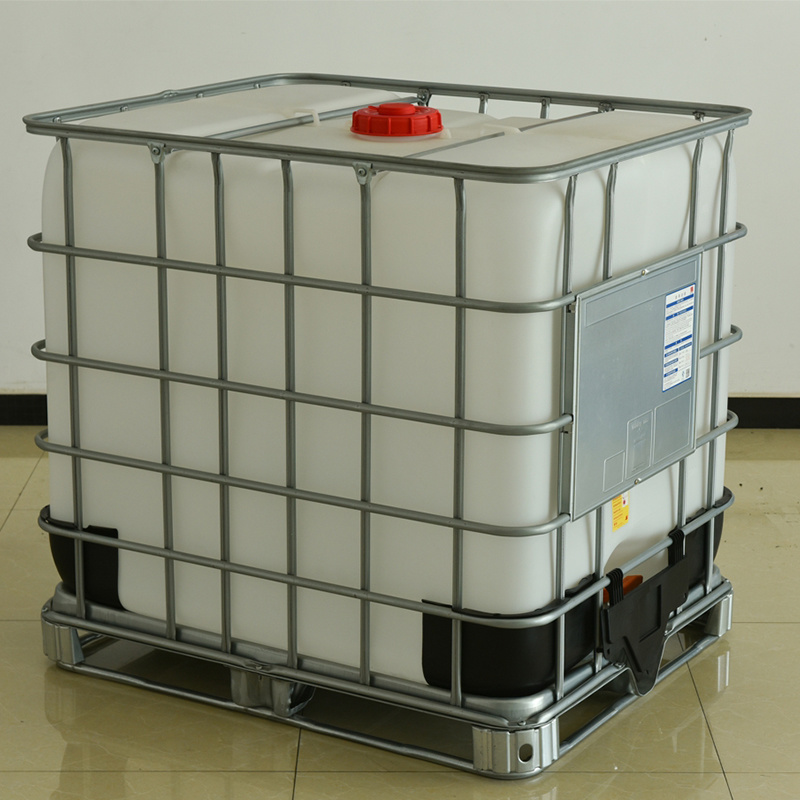
Standard IBC Tank Size Categories
IBC tanks are manufactured in standardized capacity grades defined by ISO 21871 and regional industry standards, ranging from compact specialty units to high-volume bulk models. Per ISO specifications, IBCs are formally defined as 250L to 3,000L total capacity, with three primary size categories dominating commercial and industrial use.
表格
| Size Category | Common Capacities | Equivalent 55-Gallon Drums | Core Use Case Profile |
|---|---|---|---|
| Compact / Specialty | 450L (120 gal), 600L (159 gal), 680L (180 gal) | 2 – 3.3 drums | Small-batch production, specialty materials, portable field use |
| Standard / Industrial | 800L (211 gal), 1000L (275 gal), 1250L (330 gal) | 3.8 – 6 drums | General bulk storage, transport, production line feed, distribution |
| High-Capacity / Bulk | 1500L (396 gal), 2000L (528 gal), 3000L (793 gal) | 7.2 – 14.4 drums | High-volume fixed storage, regional distribution hubs, bulk transfer |
Compact IBC Tank Sizes
Compact IBC sizes are engineered for operations where standard 1000L units hold too much volume or take up too much space. These units retain the same forklift-compatible pallet base design but reduce height and volume for lower-throughput applications. They are the preferred choice for specialty chemical batches, pharmaceutical intermediate products, flavor and fragrance concentrates, and remote construction site supply. Their smaller gross weight also makes them suitable for facilities with lower-capacity forklifts or floor load limits.
Standard IBC Tank Sizes
The standard size band, led by the 1000L (275-gallon) unit, represents over 80% of global IBC tank usage. This size category is optimized for universal logistics compatibility, matching standard pallet footprints, truckload configurations, and typical industrial batch volumes. The 1000L size is the most widely available, with the largest selection of materials, certifications, and replacement parts. The 1250L (330-gallon) variant delivers 25% more volume on the same base footprint, making it popular for high-throughput facilities with adequate ceiling height.
High-Capacity IBC Tank Sizes
High-capacity IBC sizes are designed for stationary bulk storage and high-volume distribution hubs where maximizing volume per square foot is the priority. These units feature wider or deeper base footprints and reinforced frame construction to handle the increased weight of full loads. They are most commonly used for bulk chemical terminal storage, large-scale agricultural input distribution, and municipal water treatment chemical dosing systems. Due to their increased weight and dimensions, high-capacity units require heavy-duty forklifts and may have reduced stacking capability compared to standard sizes.
IBC Tank Sizes by Industry: Recommended Capacities
Different industries operate with characteristic batch sizes, material values, and distribution models that favor specific IBC size ranges. Aligning tank size with industry norms ensures compatibility with supply chain partners and avoids over- or under-sizing.
Chemical Manufacturing
- Specialty & fine chemicals: 450L – 800L compact sizes match small-batch production runs and high-value material inventory control.
- Industrial & commodity chemicals: 1000L – 1250L standard sizes are the industry default for bulk transport and storage of solvents, surfactants, and industrial formulations.
- Bulk chemical terminals: 2000L – 3000L high-capacity units maximize storage density for high-volume commodity chemicals.
Food & Beverage Processing
- Flavors, concentrates & additives: 450L – 600L compact sizes accommodate low-volume, high-value ingredients and reduce cross-contamination risk between batches.
- Bulk base ingredients: 1000L standard size is the universal standard for edible oils, liquid sugars, juice concentrates, and fermentation broths.
- High-volume production facilities: 1250L units reduce the number of tank changeovers on high-speed production lines.
Agriculture & Agrochemicals
- Small farm & specialty crop use: 600L – 800L sizes match application volumes for smaller operations and specialty crop treatments.
- Row crop & large-scale agriculture: 1000L standard size aligns with standard farm equipment, sprayer fill rates, and regional distribution networks.
- Bulk fertilizer terminals: 1500L – 2000L high-capacity units minimize handling frequency for high-volume seasonal application.
Pharmaceutical & Cosmetics
- Active ingredients & specialty formulations: 450L – 600L compact sizes support small-batch production and strict inventory traceability.
- Bulk excipients & process water: 1000L standard size is the most widely validated capacity for sanitary production and clean-in-place systems.
Construction & Field Operations
- Remote job sites & small projects: 600L – 800L portable units work with smaller delivery vehicles and on-site material demand.
- Large construction projects: 1000L standard size balances volume with maneuverability for concrete admixtures, waterproofing compounds, and dust control water.
IBC Tank Size vs. Traditional Packaging: Volume Efficiency Comparison
Understanding how IBC tank sizes translate to traditional drum packaging helps quantify the efficiency gains of switching to intermediate bulk containers.
A standard 1000L (275-gallon) IBC tank replaces five 55-gallon drums while occupying approximately 35% less floor space. This means you store the same volume in roughly one-third the footprint, or store nearly three times the volume in the same warehouse area. On a per-gallon basis, standard-size IBCs reduce packaging cost by 20–30% compared to drums, and cut handling labor by up to 80% by reducing the number of units moved.
Compact 600L IBCs replace roughly three drums with similar space savings, making them a logical upgrade for operations that currently use 1–3 drum quantities per batch. High-capacity 2000L units replace nearly 11 drums per unit, delivering maximum efficiency for high-volume commodity storage.
6 Key Factors for Selecting the Right IBC Tank Size
Use this structured framework to evaluate IBC tank sizes based on your specific operational and financial requirements.
1. Production Batch Volume Alignment
Match tank size to your typical batch size to minimize partial tanks and leftover material. Ideally, one tank equals one production batch to eliminate partial tank inventory and reduce cross-contamination risk between product changeovers. For variable batch sizes, select a size that accommodates your most common batch volume, with smaller units for occasional specialty runs.
2. Transport Cost Efficiency
Calculate per-unit freight cost by dividing tank volume by the number of units per truckload. Standard 1000L units deliver the lowest per-liter freight cost for most over-the-road routes, as they optimize both weight and volume utilization of standard 53-foot trailers. Larger sizes may reduce per-unit handling cost but can hit weight limits before filling available trailer volume with dense liquids.
3. Warehouse Storage Density
Evaluate storage capacity per square foot of floor space. Taller, higher-capacity tanks maximize vertical density but require higher ceiling heights and stronger racking. Standard 1000L units offer the best balance of vertical and horizontal density for most warehouse racking configurations.
4. Material Value & Inventory Turnover
For high-value materials, select smaller IBC tank sizes to reduce inventory carrying cost and limit financial exposure per container. For low-value, high-turnover commodities, larger sizes minimize handling frequency and total packaging cost.
5. Material Handling Equipment Capacity
Verify that your forklifts, pallet jacks, and racking systems support the gross weight of fully loaded tanks. A full 1000L water-based tank weighs approximately 1,050kg (2,315 lbs), while 3000L units can exceed 3,200kg (7,050 lbs) and require heavy-duty material handling equipment.
6. Product Shelf Life & Stability
For materials with limited shelf life or temperature sensitivity, smaller IBC tank sizes support faster turnover and reduce the risk of product degradation. For stable, long-shelf-life materials, larger sizes maximize storage efficiency.
Common IBC Tank Size Mistakes to Avoid
Avoid these frequent sizing errors that lead to increased cost and operational inefficiency:
- Oversizing for general use: Selecting the largest available size to “get more volume” often leads to partial tanks, wasted space, and higher transport costs when weight limits are reached before volume capacity.
- Undersizing high-volume operations: Using too many small tanks increases handling time, seal points, and total packaging cost compared to fewer larger units.
- Ignoring gross weight limits: Focusing only on volume without considering material density can result in overloaded tanks that exceed forklift and racking weight capacities.
- Forgetting future scalability: Selecting sizes based only on current volume without accounting for projected growth can require premature replacement of your entire tank fleet.
- Assuming all sizes are equally available: Compact and high-capacity sizes have limited manufacturer availability and longer lead times compared to standard 1000L units.
Conclusion
Optimizing ibc tank sizes is a high-impact decision that drives measurable improvements in logistics cost, warehouse efficiency, and production workflow alignment. By understanding standard size categories, matching capacity to your industry and batch volumes, and evaluating total operational cost rather than just upfront price, you can select the IBC size that delivers the best value for your operation. For most general industrial applications, the 1000L (275-gallon) standard size remains the optimal balance of availability, compatibility, and cost, while compact and high-capacity sizes address specialized workflow requirements.
ibc tank sizes,ibc tank size selection guide,ibc tank sizes by industry,compact ibc tank sizes,high capacity ibc tank sizes,ibc tank size vs 55 gallon drums
last page
CONTACT US
-
Address: No. 5, Torch Avenue, Sino- Europe Industrial Park of Hebei Province, (Zhongjie Huanghua City)
-
Subsidiary Company Address :Workshop 10, Zhongjie Industrial Venture Base, Zhongjie High-Tech Zone, Huanghua, Cangzhou, Hebei Province, China
Tel:400-057-0080
Email:shijiheng@czssjh.com
Tel:0317-5601506
-
Copyright © Hebei Shijiheng Plastics Co.,Ltd.
LINK
-
► About us
► Products
► Partner
► News
► Contact us
PRODUCTS


