
06
2025
-
03
What are the types of IBC tanks/totes?
Analysis of IBC tanks/Totes Types, Common Specifications & Applications
The Intermediate Bulk Container (IBC Tanks/Totes) is a widely used industrial bulk container for liquid or granular materials, valued for its efficiency, safety, and cost-effectiveness. Below is a professional analysis of its types, specifications, and industry applications.
I. Main Types of IBC tanks/Totes
IBC tanks/Totes can be classified by volume, material, or structure. Material and structural differences determine their suitability for specific environments. Common types include:

1、Composite IBC Tanks/Totes (HDPE + Steel Frame)
Structure: HDPE inner tank + galvanized steel frame + pallet base.
Application: Corrosion-resistant and impact-proof, ideal for chemical and food industries. The steel frame ensures stacking stability (2-3 layers).
Features: A popular type with an HDPE blow-molded inner tank for strength and compatibility with common liquids. The steel frame provides structural support during transport.

2、Stainless Steel IBC Tanks/Totes
Structure: 304/316L stainless steel inner tank + steel frame (optional insulation).
Application: Resists high temperatures and strong corrosion, used for pharmaceuticals, high-purity chemicals, and food-grade liquids.
Features: Heavier than standard IBC tanks/Totes, designed for highly corrosive substances with superior stability.
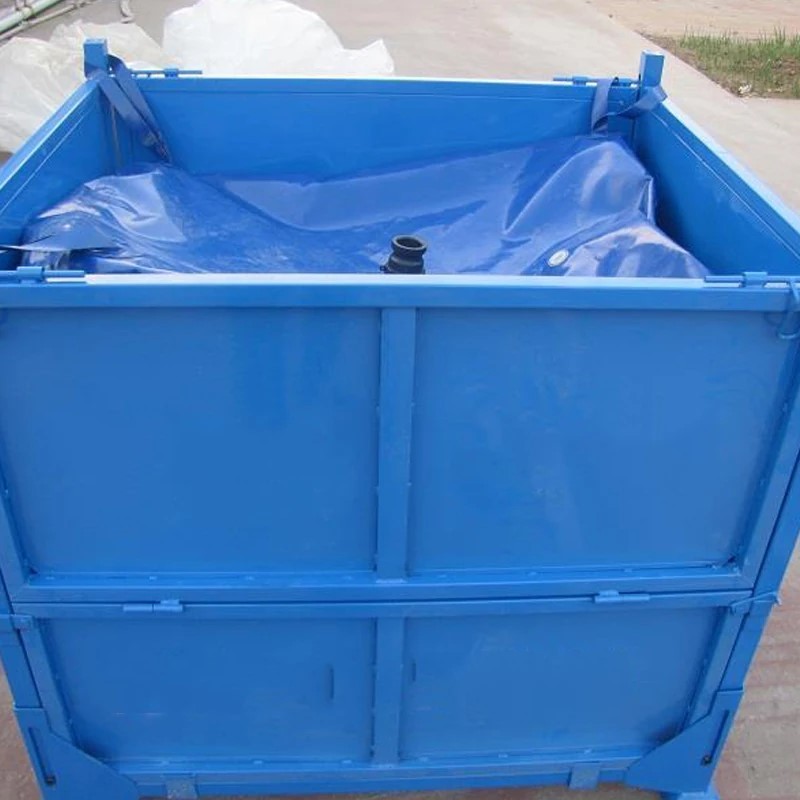
3、Collapsible IBC Tanks/Totes
Structure: Foldable PVC liner + detachable steel frame.
Application: Suitable only for low-density liquids like water.
Features: Reduces logistics costs by 70% when empty. Limited to non-reactive liquids due to material constraints.
Unsure which IBC tanks/totes suits your product? Contact us for tailored solutions.
II. IBC Tank/Totes Specifications
Common capacities include 500L, 1000L, and 1200L. Key parameters:
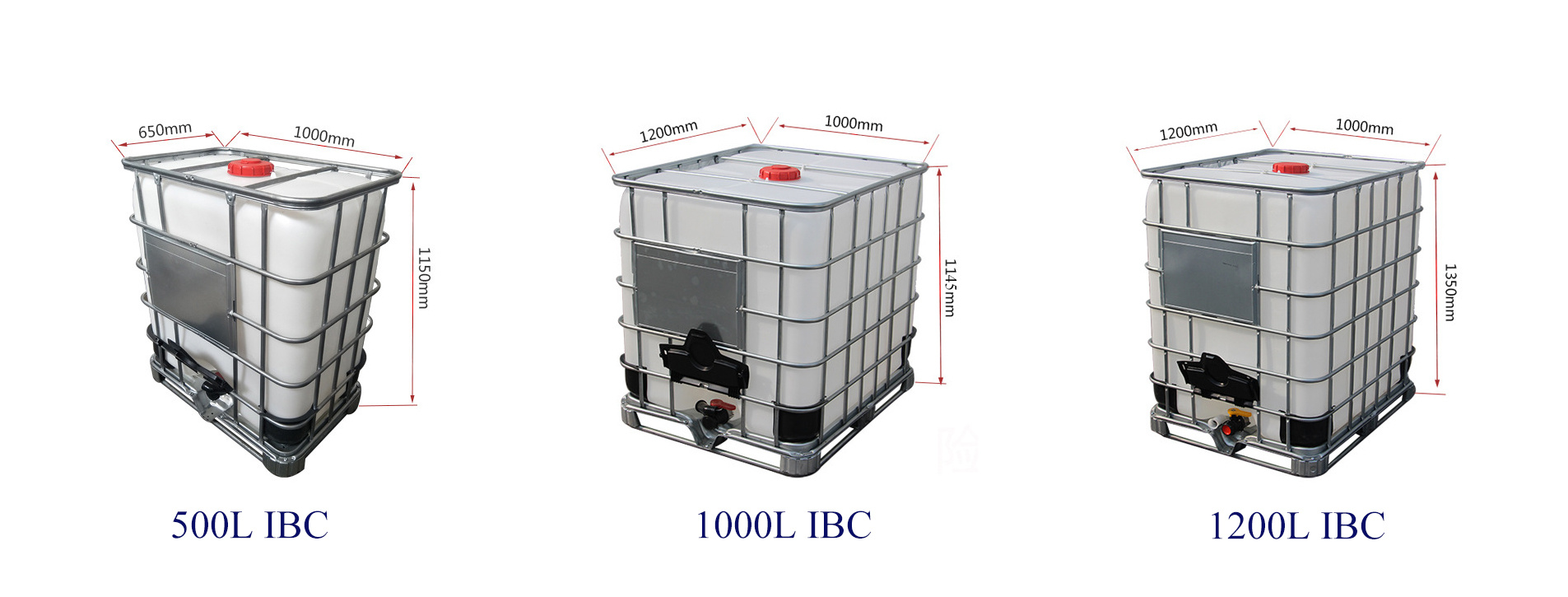
Capacity | 500L | 1000L | 1200L |
Weight | 40KG ±1 | 58KG ±1 | 65KG ±1 |
Dimensions | 1000×650×1150mm | 1200×1000×1145mm | 1200×1000×1350mm |
(For exact specifications, consult suppliers.)
Valve Options: Ball valve (general use) or butterfly valve (high flow).
Certifications: UN certification for hazardous goods; FDA compliance for food-grade contact.
III.IBC Tanks/Totes Industry Applications
Chemicals: Solvents, resins, acids/bases (≤40% concentration). Use composite IBC tanks with anti-static coating (UN-certified).
Food & Beverage: Edible oils, syrups, additives. Use stainless steel or food-grade HDPE IBC tanks with quick-clean ports.
Pharmaceuticals: APIs, intermediates, sterile solutions. Use stainless steel IBC totes with electropolished interiors (Ra ≤0.4μm).
Agriculture & Environment: Pesticides, wastewater, fertilizers. Use composite IBC tanks (chemical-resistant) or collapsible IBC totes (seasonal use).
IV. IBC Tanks/Totes Selection Guidelines
Safety: Comply with UN packaging standards (e.g., UN 31HA1/Y) for hazardous materials.
Cost Efficiency: Steel-frame IBC totes (8-10 years lifespan) for high-frequency use; collapsible IBCs for temporary storage.
Compliance: Follow FDA (food) and EU 10/2011 (pharma) regulations.
By aligning IBC tanks/totes types with industry needs, companies can optimize logistics and reduce costs. Recyclable HDPE IBC tanks are emerging as a sustainable trend.
More articles about IBC tanks/Totes, I hope they can help you:
Detailed Explanation of IBC Totes/tanks Selection and Usage for Beginners
What should be noted during the transportation of IBC totes?
Application of IBC tanks in food production
How IBC Tanks Revolutionize the Plastic Drum Industry
How IBC Ton Tanks Ensure Safe Transportation of Plastic Products?
This article is available in Chinese(IBC吨桶的种类、常见规格及应用解析) and Spanish(Análisis de Tipos, Especificaciones y Aplicaciones de los IBC)
IBC tanks,ibc totes,What are the types of IBC tanks/totes?
CONTACT US
-
Address: No. 5, Torch Avenue, Sino- Europe Industrial Park of Hebei Province, (Zhongjie Huanghua City)
-
Subsidiary Company Address :Workshop 10, Zhongjie Industrial Venture Base, Zhongjie High-Tech Zone, Huanghua, Cangzhou, Hebei Province, China
Tel:400-057-0080
Email:shijiheng@czssjh.com
Tel:0317-5601506
-
Copyright © Hebei Shijiheng Plastics Co.,Ltd.
LINK
-
► About us
► Products
► Partner
► News
► Contact us
PRODUCTS


