
11
2025
-
03
Comprehensive Guide to IBC Totes: Product Features, Industry Applications & Shipping Guidelines
Comprehensive Guide to IBC Totes: Product Features, Industry Applications & Shipping Guidelines
Introduction: Why Are IBC Totes the Global Standard for Liquid Transportation?
In the global chemical and liquid logistics industries, Intermediate Bulk Containers (IBC Totes) have become the gold standard for transporting liquids and semi-fluids due to their efficiency, safety, and cost-effectiveness. With a decade of expertise in plastic product trading, this 2,000+ word guide provides an in-depth analysis of IBC totes’ core advantages, diverse applications, and critical maritime shipping protocols. By the end, you’ll gain actionable insights to reduce cross-border logistics costs by 30%+ while ensuring compliance and operational excellence.
1. Technical Breakdown of IBC Totes
1.1 Definition & Structural Design
IBC totes feature a triple-layer composite structure:
- Outer Frame: Galvanized steel or high-density polyethylene (HDPE) grid (impact resistance ≥10 kJ/m²)
- Inner Container: Food-grade HDPE (2.5–3.5 mm thickness, FDA 21 CFR certified)
- Base Pallet: Modular design (static load capacity ≥1,500 kg; dynamic load ≥1,000 kg)

(IBC Tote cross-sectional view highlighting layers)
1.2 Technical Specifications Comparison
Parameter | Standard | Anti-Static | Chemical-Grade |
Capacity | 1,000 L | 1,000 L | 1,000 L |
Temp. Range | -40°C to 60°C | -30°C to 50°C | -20°C to 70°C |
Valve Type | Butterfly | Ball valve + grounding | 316 stainless steel |
UN Certification | UN31HA1/Y | UN31HA2/Y | UN31HA1/X |
1.3 Innovative Technologies
- Multi-Layer Coextrusion: 3-layer HDPE inner liners improve oxygen barrier efficiency by 40%.
- Smart Monitoring: Optional RFID temperature sensors (±0.5°C accuracy).
- Quick-Clean Design: 135° discharge port reduces residue to <0.1%.
2. Industry Applications & Case Studies
2.1 Chemical Industry Solutions
- Hazardous Material Transport: Compliant with ADR/RID for Class II dangerous goods (e.g., UN 1203 diesel).
- Case Study: A global paint manufacturer reduced annual transport losses from 2.3% to 0.7% using anti-static IBC totes.
2.2 Food-Grade Applications
- Aseptic Filling: CIP (Clean-in-Place) systems meet ISO 22000 microbial standards.
2.3 Pharmaceutical Compliance
- GMP Standards: Inner surface roughness ≤0.8μm (USP <88> Class VI compliant).
- Temp. Control: Phase Change Material (PCM) insulation maintains ±2°C for 72 hours.
3. Maritime Shipping Protocols
3.1 Pre-Shipment Checklist
Documentation:
Valid UN Performance Test Report (5-year validity).
Material Safety Data Sheet (MSDS).
CTU Code-compliant container certificate.
Pre-Treatment:
Cleaning: Residuals <10 ppm.
Drying: Internal humidity <15% RH.
Leak Test: 0.3 bar pressure held for 30 minutes.
3.2 Container Loading Optimization
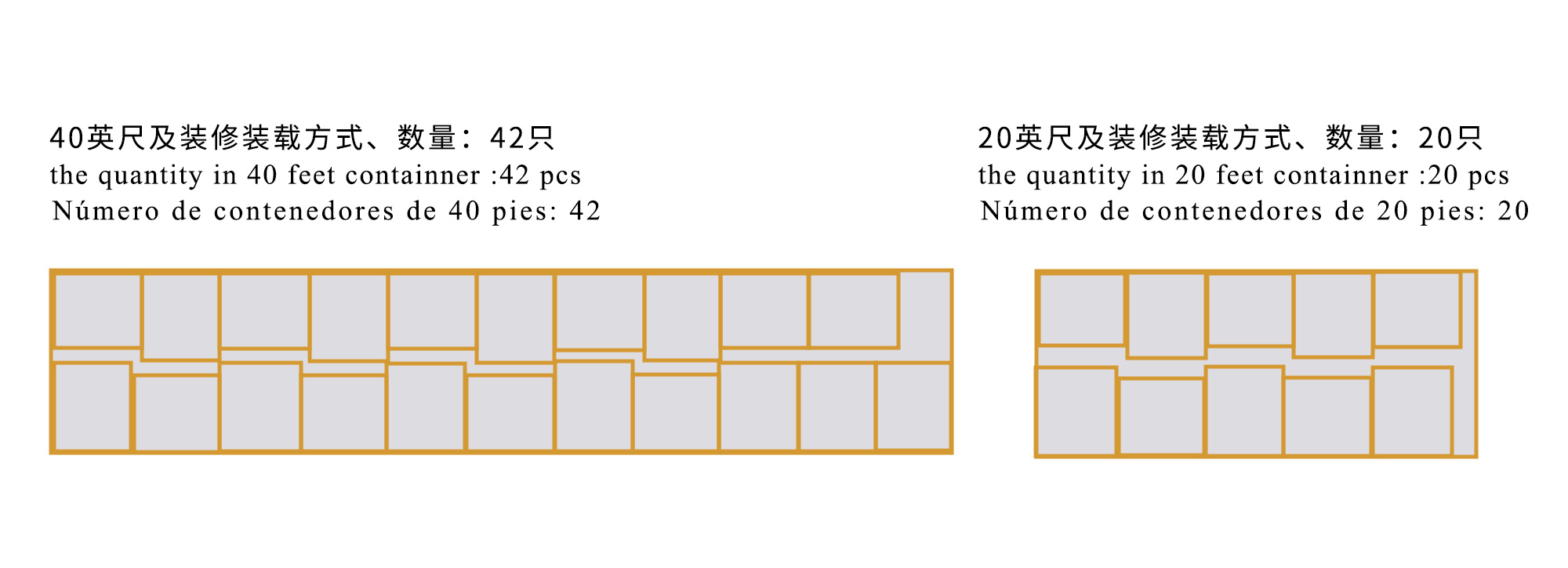
IBC Tote Container Loading
Container Type | 20’GP | 40’HQ |
Units/Layer | 20 | 42 |
Stacking | 2 layers | 3 layers |
Securing | Cross straps + anti-slip mats | Honeycomb pads + airbags |
3.3 Risk Mitigation Strategies
Temp. Monitoring: Refrigerated containers must maintain -5°C to 25°C (±3°C/24h).
Moisture Control: Silica gel desiccants (≥200 g/m³).
Emergency Kits: Include polymer sealants and repair tapes.
4. IBC Totes sea Freight FAQs
Q1: When is UN certification required for IBC totes?
UN-marked totes are mandatory for IMDG Code-regulated hazardous materials, requiring packaging Group II standards (≤3.0 bar hydraulic test).
Q2: How to minimize cargo damage claims during shipping?
Ensure loading density ≥650 kg/m³.
Use anti-slip pallets (friction coefficient ≥0.6).
Layer EPE cushioning between stacks.
Q3: Guidelines for reusing IBC totes?
Track cleaning cycles.
Inspect wall thickness regularly (minimum ≥1.2 mm).
Retire units after 5 years or 10 cycles.
5. Market Trends & Future Outlook
5.1 Technological Advancements
Smart Totes: GPS tracking + real-time sensors (5-minute updates).
Eco-Materials: Bio-based HDPE (60% lower carbon footprint).
Modular Systems: Quick-assembly designs triple turnaround efficiency.
5.2 Market Forecast (Grand View Research)
Global IBC market CAGR: 5.7% (2023–2030).
Asia-Pacific to dominate with 45%+ market share (driven by China/India).
Conclusion: Transform Your Supply Chain with IBC Totes
Adopting premium IBC tote solutions delivers:
✅ 20–35% lower logistics costs
✅ 50%+ fewer cargo claims
✅ 80% faster cross-border operations
Contact us today for a customized IBC tote solution and free shipping risk assessment!
More articles about IBC tanks/Totes, I hope they can help you:
What are the types of IBC tanks/totes?
Detailed Explanation of IBC Totes/tanks Selection and Usage for Beginners
What should be noted during the transportation of IBC totes?
Application of IBC tanks in food production
How IBC Tanks Revolutionize the Plastic Drum Industry
How IBC Ton Tanks Ensure Safe Transportation of Plastic Products?
IBC Totes,ibc totes Shipping,ibc totes guide
last page
last page
CONTACT US
-
Address: No. 5, Torch Avenue, Sino- Europe Industrial Park of Hebei Province, (Zhongjie Huanghua City)
-
Subsidiary Company Address :Workshop 10, Zhongjie Industrial Venture Base, Zhongjie High-Tech Zone, Huanghua, Cangzhou, Hebei Province, China
Tel:400-057-0080
Email:shijiheng@czssjh.com
Tel:0317-5601506
-
Copyright © Hebei Shijiheng Plastics Co.,Ltd.
LINK
-
► About us
► Products
► Partner
► News
► Contact us
PRODUCTS


